
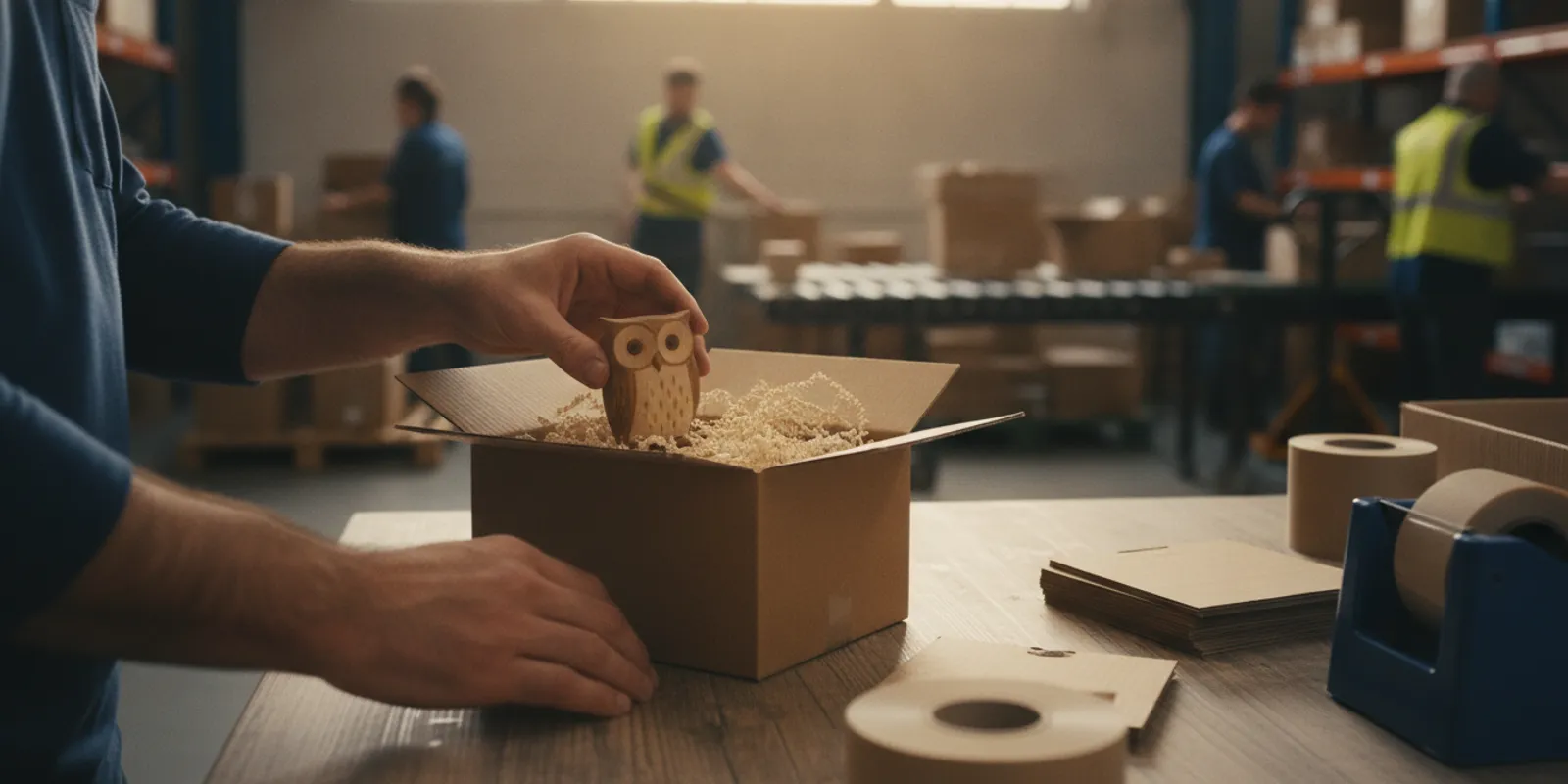
Sustainable fulfillment packaging is not simply a matter of swapping one material for another. It means designing the package, packing process, and shipment together so the product arrives protected, the amount of material is appropriate, and the customer can understand what to do with the packaging afterward. For New England manufacturers, distributors, and e-commerce teams, the best approach is practical: prevent damage first, then remove unnecessary material without sacrificing a professional presentation.
What Does Sustainable Fulfillment Packaging Need to Do?
Fulfillment packaging has several jobs at once. It must hold and protect the product through handling and transit, work with the packing team’s process, fit the order without excessive void fill, and represent the business when it arrives. Sustainability is part of that system, not a separate finish applied after the packaging is chosen.
A useful starting point is to look at the complete shipment rather than one component. That may include the corrugated shipper, interior cushioning or inserts, tape, labels, and any product packaging that travels inside the box. A change to one item can affect the others. For example, a smaller carton can reduce unused space, but only if the product still has enough protection and the box can be closed and handled reliably.
The U.S. Environmental Protection Agency describes sustainable packaging in the context of sustainable materials management, a way to consider materials across their life cycle. That broader view is useful for fulfillment teams: consider the materials used, the function they perform, and what happens after the shipment is opened, rather than judging a package by one feature alone. See the EPA’s sustainable packaging information for background.
In practice, a thoughtful program usually works toward four outcomes:
- Protection: Products arrive in good condition, with packaging selected for the actual item and shipment.
- Material discipline: Boxes and cushioning are sized and used to meet a clear need, not simply added by habit.
- Practical recovery: Packaging choices account for local recycling or reuse realities and avoid confusing customers with unsupported disposal directions.
- Presentation: A shipment feels organized and intentional, with readable labels and a tidy opening experience.
How Can a Fulfillment Team Find Unnecessary Packaging?
Begin with a small, representative sample of orders. Include common single-item shipments, multi-item orders, fragile products, and any shipment type that has a different packing procedure. Observe the whole task at the packing station: how the order is picked, what materials are selected, how the product is protected, how much unused space remains, and whether the box closes without forcing or rework.
Do not assume that a large-looking package is wasteful or that a small package is automatically better. A box may need room for cushioning, product movement controls, or an irregular shape. Instead, identify the purpose of every component. Ask: Does this material prevent a specific kind of damage? Is it required to keep items from contacting one another? Does it make the order easier to identify, handle, or open? If the answer is unclear, test a revised pack method before removing it from standard work.
Record simple observations that teams can compare over time. Useful details include the box style and dimensions, the number and type of interior components, the packing steps, product condition after a representative shipment, and any employee notes about speed or difficulty. Pair those observations with the available order and damage records. This avoids making a sustainability change based on appearance alone.
For a structured way to review packaging choices, use a packaging material selection matrix. A packaging quality control checklist can also help teams document checks and make sure a new packing method is evaluated consistently.
How Do You Right-Size Boxes Without Increasing Damage?
Right-sizing means choosing a package that accommodates the product and the necessary protection with as little avoidable empty space as practical. It does not mean forcing every order into the smallest possible carton. A box that is too tight can make packing difficult, put pressure on the product, or leave no room for protective features. A box that is too large may call for extra void fill and can be harder to handle or store.
To improve box selection, segment orders into manageable product or order groups. Start with the items that ship often, then note dimensions, weight, fragility, orientation requirements, and whether the order contains one product or several. From there, test a small set of box sizes against the actual product combinations. The goal is a repeatable assortment that covers common orders without treating every order as identical.
- Measure the packed product. Include any protective sleeve, inner carton, or component that must remain in place.
- Identify the protection need. Consider fragility, edges, surface finish, weight, and whether separate items could collide.
- Choose a box with usable clearance. Leave the space needed for protection and assembly, but avoid excess void that does not serve a purpose.
- Pack and inspect real orders. Confirm the box closes cleanly, the product is stable, and the packing method is easy to repeat.
- Review the shipment outcome. If damage or packing difficulty appears, adjust the design rather than simply removing more material.
For products with unusual shapes, a custom design review can help evaluate whether a standard carton, insert, or more tailored corrugated design is appropriate. Volk Packaging offers custom packaging design alongside stock boxes and custom corrugated boxes. The packaging design checklist can help teams prepare product and shipment details for that conversation, while a packaging prototype process gives buyers a way to evaluate a design before adopting it at scale.
Which Materials Make Sense for Protection and Recovery?
There is no single material choice that suits every fulfillment order. Corrugated boxes are widely used for shipping and can be selected in different styles and constructions based on product and handling needs. Interior protection may call for corrugated partitions or inserts, foam packaging, paper-based cushioning, or another suitable material. Select by function first: what must the package protect against, and what is the simplest reliable way to provide that protection?
Then consider how the materials work together at the end of use. A package made from several components can be harder for a recipient to separate and sort than one with fewer distinct parts. When multiple materials are needed, make the components easy to access and remove where feasible. Do not label a material recyclable in every location unless that claim is supported for the particular material and the intended audience. Recycling availability and accepted materials can vary by community.
Also avoid choosing a material only because it sounds sustainable. Evaluate its protective performance in the actual shipment, its fit with packing operations, the quantity required, and realistic end-of-use options. If a change reduces one material but causes product damage or more repacking, it may not be an improvement overall. Keep an eye on the full outcome rather than just a single package feature.
For cushioning decisions, the protective foam packaging guide can help teams consider the role of foam packaging when the product requires it. The intent is not to prescribe one material for every item, but to match protection to the product and shipment. Volk Packaging also offers water-based inks and FSC- and SFI-certified packaging; buyers can ask about relevant options when discussing their specifications.
When Should You Consider Reusable Packaging?
Reusable packaging may be worth evaluating when shipments move repeatedly between known locations and a return path is practical. It is a different operating model from one-way parcel delivery. Before adopting it, a team needs to think through who collects the packaging, how it returns, how it is inspected or cleaned if required, where it is stored, and how replacements are handled when units are lost or damaged.
For recurring B2B movements, document the route, shipment frequency, handoff points, and responsibilities on both sides. Ask receiving teams whether they can hold and return containers. Consider whether the packaging format protects the product consistently and can be handled with available equipment. If reverse logistics are uncertain, a reusable format may create extra work rather than simplifying the system.
The Sustainable Packaging Coalition’s Guidance for Reusable Packaging is a useful reference when assessing the conditions needed for reuse. Treat reuse as an operational decision that needs a workable return loop, not as a label that automatically makes a shipment preferable. Many e-commerce orders travel to individual customers and do not have a reliable return route, so teams should evaluate reusable packaging only where the logistics support it.
How Can Printing and Unboxing Support a Better Shipment?
Sustainable fulfillment packaging still has to look professional. Clear identification and an orderly opening experience can help customers recognize the shipment, find the product, and understand what to do next. The most effective presentation choices are often purposeful: legible shipping and product information, a neat arrangement of the contents, and minimal material that does not have a protective or communication role.
Use printing where it helps the package do a job, such as conveying handling or brand information, and choose the print approach based on the packaging requirements. Volk Packaging offers digital and flexographic printing and uses water-based inks. If printed packaging is part of the plan, discuss the artwork, coverage, and production needs early so the design fits the selected box and does not complicate packing.
Unboxing can also be improved through the way a product is placed and secured. Keep inserts and instructions easy to locate. Avoid loose items that shift around or make the order feel unfinished. For multi-item orders, dividers, kitting, or a planned packing sequence may improve organization while protecting products. Review the kitting and labeling information if orders require coordinated components or labels.
Presentation should not become a reason to add layers without a clear purpose. A carefully selected box, clean print, and well-organized contents can create a considered experience without adding decorative components that are difficult to reuse or sort.
How Do Fulfillment Operations Keep Packaging Changes Consistent?
A design only works if the packing team can use it the same way across shifts and order types. When a box size, insert, or work instruction changes, update the packing station and explain what has changed and why. Show the team how to identify the right package, where components go, and how to check that the finished order is secure.
Keep packaging instructions visual and specific. A useful work instruction might identify the product or order group, the approved box, the required cushioning, and the final check. Avoid vague directions such as “use enough fill.” If the packer has to guess, the amount of material and the protection outcome may vary from order to order.
Inventory and order data can inform these choices. Teams that understand which products and combinations ship most often can prioritize packaging tests around frequent orders and keep appropriate supplies available. A guide to e-commerce inventory management can help frame the connection between stored inventory and fulfillment activity. For companies reviewing the wider process, Volk Sanford provides picking, packing, shipping, kitting, labeling, inventory management, warehousing, and contract-packaging services.
Changes should be reviewed after implementation. Ask packers where the method is awkward, check whether the right supplies are available, and review product condition and packaging usage against the previous method. If the team has to improvise frequently, revisit the design or the instructions. Consistency is part of responsible material use because it helps avoid overpacking in one shift and under-protecting in another.
How Do Packaging Priorities Change by Order Type?
Different fulfillment patterns create different packaging questions. A single-item parcel, a multi-item e-commerce order, and a recurring shipment between business locations may all need corrugated packaging, but the right packing method is not necessarily the same. Segmenting orders helps avoid a one-size-fits-all standard that uses too much material for some products and too little protection for others.
Single-item parcel orders
For a product shipped on its own, begin with its dimensions, weight, and points of vulnerability. Confirm whether the product needs a protective sleeve or cushioning to prevent surface damage, then choose a box that leaves room for the required protection without creating needless empty space. Pay attention to the customer’s first interaction with the product: avoid packing materials that obscure the item or require awkward removal when a simpler arrangement will do. Test the whole method, including how the box is closed and labeled.
Multi-item orders
When orders contain several items, the central questions are separation, movement, and organization. Determine whether products can contact one another safely, whether they need dividers, and whether the packing sequence helps the team verify that every item is included. A divider or insert can take up space yet still be the more considered choice if it keeps products from colliding and makes the contents easier to unpack. Conversely, adding individual layers to every item may be unnecessary if the items already fit securely in an organized carton. Test common combinations rather than designing around only one ideal order.
Recurring business shipments
Regular shipments between known business locations may support a different conversation. Teams can review delivery frequency, handling practices, palletization, and whether packaging can be returned or reused. A predictable route may make a reuse trial possible, but only when both ends can manage the return and storage steps. For one-way orders, focus first on a well-specified corrugated package and a pack method that protects the goods through the expected handling journey.
For any order type, involve the people who pick and pack as well as those who specify packaging. They can point out whether a new carton fits the work area, whether materials are easy to reach, and where steps cause delays or inconsistent results. The packaging procurement checklist can help teams gather requirements before comparing supplier options, and the shipping and packaging supplies overview provides context on packaging supplies used in shipping. A practical review connects the specification with how orders are actually handled, not just how the package looks on a design screen.
How Should Teams Compare Packaging Options?
Use a simple comparison to keep the discussion grounded in the product, process, and end-of-use requirements. The table below is a starting point, not a universal material ranking. A packaging review should confirm that the option meets the actual product and shipment needs before it is adopted.
| Option | Best suited to | Questions to check |
|---|---|---|
| Right-sized corrugated shipper | Many parcel and business shipments needing an outer protective box | Does the construction and size protect the product? Can the team pack it consistently? |
| Corrugated insert or divider | Products that need separation, positioning, or organized multi-item packing | Does it hold items securely and remain practical to assemble? |
| Foam protection | Products whose shape or protection requirements call for a tailored cushioning solution | Is the cushioning needed for the product, and can the recipient manage the material appropriately? |
| Paper-based cushioning | Orders that need fill or surface protection and are compatible with the selected paper material | Does it prevent movement and damage without using an excessive amount? |
| Reusable container | Repeated shipments on a route with a reliable return and handling process | Who returns, inspects, stores, and replaces the container? |
When comparing alternatives, do not focus on an assumed universal cost or environmental winner. These depend on package specifications, order profile, shipment route, recovery options, and operating requirements. Instead, state the problem to solve, describe the test conditions, and compare the options against the same criteria. A packaging supplier can help assess specifications and prototypes; the final decision should reflect the actual product and distribution process.
What Should a Sustainable Packaging Review Include?
A periodic review keeps packaging aligned with product changes, new order patterns, and operational realities. It need not begin as a large project. Start with a frequent order type or a product that has changed, and use a repeatable checklist to record what you learn.
- Product details: Current dimensions, weight, fragility, surface finish, and any components shipped together.
- Order profile: Common quantities, destinations, parcel or pallet handling, and any recurring B2B routes.
- Package specification: Box style and size, protective materials, closure, print, labels, and packing sequence.
- Performance: Fit, assembly, ease of packing, observed movement, and product condition after representative shipments.
- Material use: Which components are essential, what can be reduced, and whether recipients can separate and sort the materials.
- Operational fit: Supply availability, storage, employee instructions, and the ability to repeat the method across shifts.
- Review owner: Who approves changes, communicates the new standard, and checks the result after rollout.
For palletized shipments, consider the unit load as well as each carton. The warehouse pallet packaging best practices guide addresses how cartons are arranged and protected for warehouse handling. A stable, well-planned load can be just as important to a packaging review as the box selected for an individual item.
Frequently Asked Questions
Does sustainable fulfillment packaging mean using less material in every order?
No. It means using materials intentionally. Some products need substantial protection, while others may be packed with less cushioning or a more suitable box. The goal is to avoid unnecessary material without increasing the risk of damage or creating a packing method that employees cannot repeat.
Is a recyclable box enough to make an entire shipment sustainable?
Not by itself. The outer box is one part of the shipment. Consider the inserts, cushioning, tape, labels, and product packaging too, along with whether the recipient can separate materials and whether local programs accept them. Make disposal statements only when they are supported for the materials and audience.
Should an e-commerce business switch to reusable shipping packaging?
Only after checking whether a return loop is practical. Reuse is easier to evaluate for recurring shipments between known locations than for one-way deliveries to individual customers. Confirm collection, return, inspection, storage, and replacement responsibilities before changing the packaging system.
How can a business test a smaller box?
Try the proposed box with representative products and the protective components required for shipping. Check fit, closure, packing time, product movement, and condition after a suitable shipment evaluation. Keep the test documented, and do not roll out the change if the smaller size compromises protection or makes packing unreliable.
Who can help review a fulfillment packaging process?
A packaging partner can review product details, box and material choices, and the packing process. For businesses that want support beyond packaging, Volk Sanford offers fulfillment services that include picking, packing, shipping, kitting, labeling, inventory management, warehousing, and contract packaging.
Discuss your fulfillment packaging requirements
A more sustainable fulfillment system starts with a clear understanding of what each package must protect and how each material will be used after delivery. Review one common shipment, test a practical improvement, and build from what works for your products and customers.