
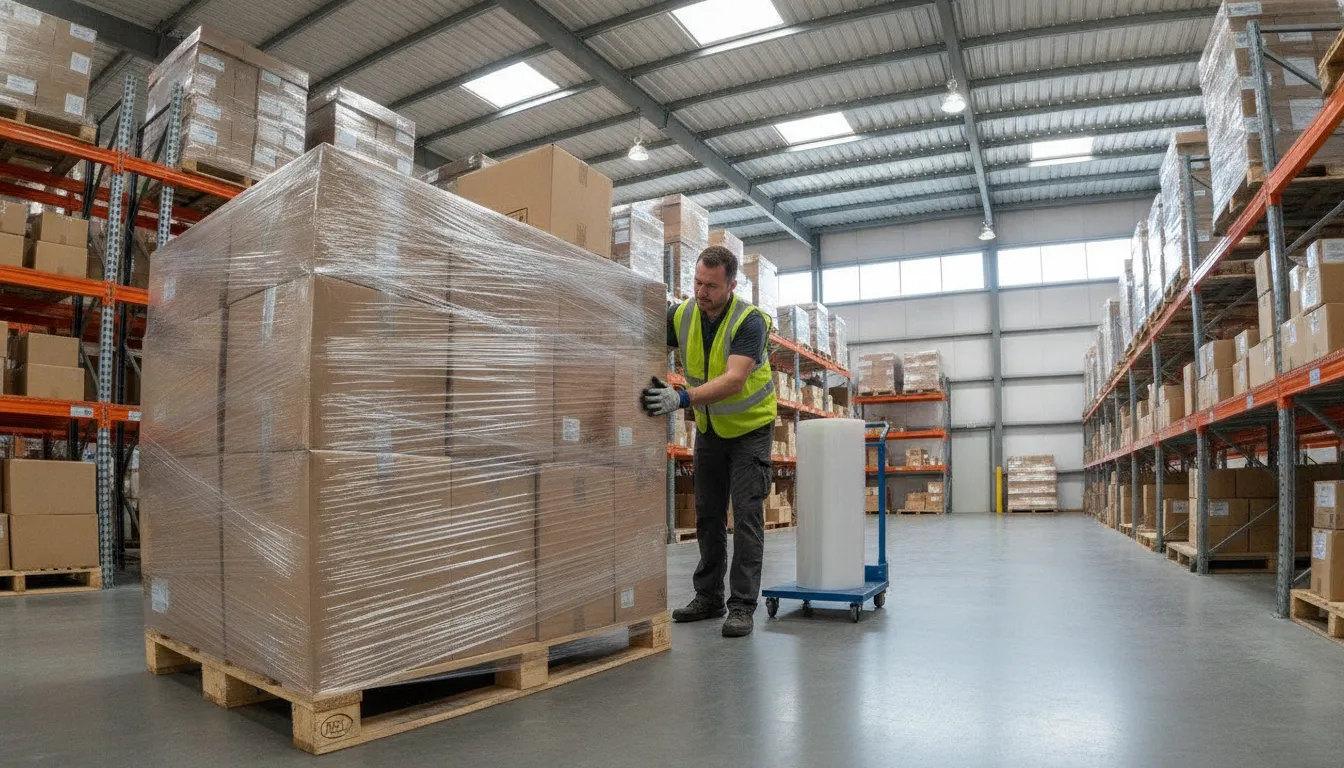
A pallet of corrugated cartons is more than a stack of boxes. It is a handling unit that must stay stable, identifiable, and protected from the warehouse floor through loading and delivery. Small decisions about carton fit, layer alignment, weight distribution, and containment can affect product protection, labor, and shipping reliability.
Request A Quote for packaging guidance tailored to your products and shipping workflow.
Warehouse pallet packaging best practices start with matching the pallet and corrugated carton configuration to the product, equipment, storage environment, and route. Build an even footprint, distribute weight deliberately, secure the load for its handling conditions, label it clearly, and inspect it before movement. There is no universal stack pattern or wrap setting, so validate the approach against the specific operation.
The right approach begins by defining what an effective palletized load must accomplish. From there, the key variables become easier to evaluate before they turn into damaged cartons, unstable loads, or avoidable warehouse work.
What Makes Warehouse Pallet Packaging Effective?
Effective warehouse pallet packaging turns individual cartons into a stable, identifiable, handling-ready unit. That unit should remain organized when it is moved, stored, inspected, and prepared for shipment. The goal is not simply to place as many boxes as possible on a pallet. It is to create a load that protects the product and gives warehouse teams a clear, repeatable way to work with it.
The right approach depends first on the product. Weight, dimensions, shape, fragility, center of gravity, and susceptibility to moisture can all influence the carton, cushioning, stacking arrangement, and containment method. A dense product may need a different base and weight distribution than a lightweight product with delicate surfaces. Mixed cartons may also require a deliberate order so that heavier units do not bear on vulnerable ones.
The pallet is part of the packaging system, not just a platform. Its footprint, condition, deck configuration, and compatibility with racks or handling equipment affect how securely the load can be built. A palletized unit should fit its intended storage and transport environment without relying on unsupported assumptions about capacity or dimensions.
Warehouse conditions matter as well. Available aisle space, rack locations, forklift access, labeling practices, and the frequency of repositioning all shape a practical specification. Packaging that works at a packing station may be less effective if it blocks identification, overhangs a rack, or makes safe access difficult.
Finally, transport introduces movement, vibration, weather exposure, and additional handling. That is why packaging design for manufacturers should be evaluated against the full distribution path. There is no universal pallet pattern, load limit, or wrap setting. The most reliable warehouse pallet packaging best practices connect product requirements with pallet fit, operating conditions, and verified handling needs.
Warehouse Pallet Packaging Best Practices for Stacking Corrugated Cartons
A stable pallet starts with the base. Choose a sound, appropriately sized pallet, then build an even footprint so carton edges remain supported rather than hanging beyond the pallet. Keep the first layer square to the pallet, align the load with the intended handling direction, and check that the surface is free from damaged boards, protruding fasteners, or debris that could distort the cartons.
As layers are added, distribute weight across the footprint instead of concentrating it in one corner. Heavier cartons generally belong lower in the load, while lighter or more crush-sensitive products need protection from excessive compression. Avoid gaps that allow cartons to shift, but do not force a box into a position that bends, crushes, or overhangs the pallet. The right arrangement depends on carton strength, contents, pallet condition, storage equipment, and the movement the load will experience.
Column stacking places cartons directly above one another. This pattern can provide a predictable vertical load path, but it may need additional containment and carton-specific qualification. Interlocking stacking offsets cartons between layers, which can help tie the load together, although the pattern may change how compression is transferred through the cartons. A hybrid arrangement combines the two where the product and operation call for it.
| Pattern | How it is formed | What to evaluate |
|---|---|---|
| Column | Cartons align in vertical columns through successive layers. | Vertical compression, carton strength, load height, and the need for wrap or other containment. |
| Interlocking | Cartons are staggered between layers in a brick-like arrangement. | Load cohesion, corner support, carton distortion, and whether the stagger creates unsupported areas. |
| Hybrid | Column and interlocking methods are combined for different zones or layers. | Product mix, layer transitions, repeatability, and documented handling results. |
Qualification should be practical, not assumed from a pattern name. Review the assembled load under the actual storage and transport conditions, including forklift handling, rack fit, vibration, and any moisture or temperature exposure. OSHA requires tiered stored materials to be stacked, blocked, or interlocked so they remain stable and secure against sliding or collapse. See OSHA 1910.176 for the applicable storage and aisle requirements.
Before standardizing a pallet build, document the approved footprint, carton orientation, weight distribution, and containment method. Teams reviewing box dimensions or suppliers can also use this corrugated packaging procurement checklist to connect pallet performance with broader packaging decisions.
How Do Unitization and Stretch Wrapping Improve Load Stability?
Unitization turns separate cartons into one more manageable pallet load. Stretch wrap, banding, cross-ties, or another containment method can help keep cartons aligned during staging, forklift movement, and transport. The right option depends on the carton material, product weight, pallet pattern, handling equipment, and distribution conditions. It should support the load without crushing boxes or hiding damage.
Containment is not a substitute for sound stacking. Build a stable footprint first, keep heavier cartons lower when appropriate, and distribute weight so the load remains balanced. OSHA forklift guidance says loads should be arranged securely and stably, centered as nearly as possible, and handled within the truck’s stated capacity. An off-center, improperly distributed, or oversized load can unbalance the forklift or exceed its capacity. OSHA’s load-handling guidance provides the relevant safety context.
Stretch wrapping can provide broad surface containment around compatible loads. Banding may be useful for a different load shape or operating requirement, but it can concentrate pressure on carton edges. In some situations, combining containment methods or adding corner protection may be appropriate. These are qualified options, not universal instructions. Avoid adopting a fixed wrap count, film tension, banding force, or application pattern without evaluating the actual load and validating it through handling or transit testing. Research guidance also recommends wrapping or banding damaged merchandise before it is carried by forklift, rather than moving a loose or compromised load. General pallet security guidance supports that precaution.
Inspect the unit before it moves
A quick inspection should confirm that cartons are not loose, leaning, crushed, or extending into a position that could interfere with handling. Check that the pallet and containment remain intact after wrapping, staging, or a change in destination. If damage appears, stop and correct the load instead of relying on additional wrap to conceal the problem. This inspection is especially important when a load will be lifted repeatedly, stored in racks, or exposed to vibration and changes in temperature.
Document recurring failures by product, pallet, and route. That record can show whether the solution is better carton fit, a revised stacking pattern, a different containment method, or a handling change. The goal is a stable, identifiable load that protects the product and can be handled consistently, not a one-size-fits-all setting.
How Should Pallets Be Labeled for Warehouse Accuracy?
A pallet label should help the next person identify, move, store, and release the load without opening cartons or relying on memory. Use a consistent identifier tied to the item, quantity, lot or order information your operation actually tracks. Print it large enough to read from the normal approach distance, and place it where stretch wrap, corner boards, or adjacent pallets will not hide it. If a load has more than one visible side, repeat the core identification on the sides your equipment and staff use most often.
Include handling information that affects the load, such as orientation, fragile contents, moisture concerns. Or a do-not-stack instruction, but only when the instruction reflects the product and the agreed handling method. Avoid vague warnings that operators cannot act on. The label should also make exceptions visible. A damaged carton, short count, mixed SKU, pending inspection, or hold status needs a clear exception label and a defined disposition path. Otherwise, an unusual pallet can be mistaken for ready inventory and create a picking or shipping error.
Labeling works best when it is paired with location discipline. Assign pallets to designated zones and keep location records current when inventory moves. Consistent zones, labels, and layouts reduce retrieval and repositioning work, especially in a busy warehouse. As one storage reference notes, disorganized pallet storage without designated zones or consistent labeling can pull workers away from productive picking: warehouse zoning and labeling guidance.
The same discipline should continue through kitting and fulfillment. When components become a kit, the finished unit needs an identifier that matches the work order and shipping requirements, not just the original component labels. Volk Sanford provides picking, packing, shipping, kitting, labeling, inventory management, warehousing, and contract packaging services. Learn more about product labeling and kitting when labeling is part of a repeatable fulfillment workflow rather than a last-minute warehouse task.
How Do You Protect Corrugated Packaging in Storage and Transit?
Corrugated cartons need protection before they ever reach a truck. Storage conditions can affect board strength, load stability, and the appearance of the finished shipment. So warehouse pallet packaging best practices should account for the building, the product, and the route ahead.
Control moisture and environmental exposure
Keep palletized cartons elevated from floor moisture and away from leaks, pests, and other contamination sources. Corrugated material can lose performance when it absorbs moisture, while moving a load between cold and warm areas may create condensation. Heat can also weaken some packaging materials. Review the actual storage and transit conditions rather than applying a universal temperature or humidity limit. The right response may involve a different board specification, added protection, improved staging, or a change in handling practice. Environmental conditions can affect pallet handling and packaging, particularly when goods move through contrasting areas.
Direct sunlight and heat sources deserve attention as well. Avoid placing cartons where prolonged exposure, radiant heat, or poor ventilation could affect the board or the product inside. Keep food, sensitive components, and other contamination-prone goods separated from chemicals, dust, damaged materials, and waste streams.
Fit pallets to racks and handling routes
Before storing a load in a rack, confirm that the pallet and carton footprint fit the location without overhang or interference. A load that fits the floor may not fit a rack beam, doorway, turn, or lift path. Inspect pallets regularly and remove damaged units rather than allowing a compromised base to support more inventory. Consistent zones and clear identification also reduce unnecessary repositioning and retrieval work. Volk Sanford provides warehouse storage services for businesses that need organized palletized inventory support.
Keep aisles clear for safe movement
OSHA 1910.176 requires stored materials to be stable and secure against sliding or collapse. It also requires sufficient safe clearance where mechanical handling equipment operates and says aisles and passageways must remain clear and in good repair. Review the OSHA material-handling standard alongside your facility procedures. Clear aisles protect people, equipment, cartons, and the load itself during storage and transit preparation.
What Should a Safe Pallet Handling Check Include?
A short check before dispatch and forklift movement can catch unstable loads before they become damaged product, blocked aisles, or handling incidents. Use the following sequence as a practical review, then adapt it to the product, pallet, equipment, storage arrangement, and transport conditions involved.
- Inspect the pallet and cartons. Look for broken boards, loose stretch wrap or banding, crushed corners, open seams, leaning cartons, and signs that the load has shifted. Separate damaged or loose loads for correction rather than moving them as-is. Confirm that cartons are seated on the pallet and that no package extends into a position where it could catch on equipment or nearby stock.
- Center the load on the pallet. Keep the footprint aligned with the pallet so the load does not create an avoidable imbalance. OSHA’s forklift load-handling guidance says to center the load as nearly as possible. An off-center, oversized, or improperly distributed load can affect forklift balance and may exceed the truck’s capacity. Read the full OSHA load-handling guidance as part of your operator and warehouse procedures.
- Distribute weight deliberately. Place the heaviest part nearest the forklift’s front wheels, while keeping cartons supported and the stack stable. Do not assume that one stacking pattern works for every box or product. If the center of gravity, carton strength, or pallet footprint changes, review the arrangement before releasing the shipment.
- Secure the unit load. Confirm that stretch wrap, banding, corner protection, or another approved method holds cartons together without crushing them. The load should be safely arranged and stable before handling. If a damaged carton requires special containment, record the correction and have the responsible person approve it before movement.
- Confirm clearance and forklift capacity. Check the truck’s stated capacity for the actual load, including how weight distribution affects handling. Verify that the pallet fits the planned rack, dock, doorway, and travel path. Keep aisles and passageways clear, with sufficient safe clearance for turns and mechanical handling equipment.
- Document exceptions before dispatch. Record unusual weight distribution, repaired cartons, nonstandard dimensions, special handling instructions, or a rejected inspection. Include the pallet or shipment identifier and the person who resolved the issue. For teams coordinating multiple handoffs, this discipline complements B2B pallet shipment preparation and gives warehouse staff a shared reference.
A documented check is not a substitute for training, equipment inspections, or site-specific safety procedures. It is a repeatable final control that helps packaging, warehouse, and shipping teams release loads with the same expectations.
When Should You Review Packaging Design or Fulfillment Support?
A pallet problem is often a design problem before it becomes a shipping problem. Review the packaging when cartons no longer fit the product securely, materials are being changed, damage patterns recur, or handling and storage conditions have changed. Requirements depend on the product and operating conditions, so a specification that worked for one item, route, or warehouse may not suit the next one.
Revisit the carton and materials when the operation changes
Start with the relationship between the product, carton, pallet footprint, and handling process. Look for excess empty space, crushed corners, shifting contents, difficult stacking, or cartons that overhang the pallet. A packaging review can also make sense after a product redesign, a change in shipment profile, new rack storage, or a move into a more demanding environment. The goal is not to select a universal box or pallet pattern. It is to match box fit, corrugated construction, foam protection, printing, and other supplies to the actual distribution requirements.
Volk Packaging provides custom and stock boxes, packaging supplies, printing, foam packaging, and custom packaging design for New England businesses. Its packaging design for manufacturers resource can help teams organize the questions to review before changing a carton or material.
Consider fulfillment support when warehouse work is the constraint
Packaging may be adequate while the workflow around it is not. If your team is spending too much time receiving, storing, picking, labeling, kitting, packing, or arranging shipments, outsourced support may be worth evaluating. Volk Sanford provides warehousing, picking, packing, shipping, kitting, labeling, inventory management, and contract packaging services. Its picking, packing, and shipping service is relevant when shipment preparation needs a more consistent operating process.
Review both sides together when inventory moves between locations, order volume changes, or packaging decisions are creating extra handling. For fulfillment inquiries, contact Volk Sanford to discuss your fulfillment requirements.
Frequently Asked Questions
What are the guidelines for pallet wrapping?
Use stretch wrap, banding, or another suitable restraint to keep cartons together, reduce shifting, and protect the load during handling and transit. The right material, application, and containment points depend on the product, carton strength, pallet pattern, equipment, and distribution conditions. Inspect the finished unit for loose cartons, exposed edges, leaning, or damage before moving it.
How many times should a pallet be wrapped?
There is no universal wrap count that fits every pallet. Determine the required containment through the load’s weight, shape, center of gravity, carton surfaces, transport route, and handling conditions. Test the completed unit under representative operations, then document the approved method rather than adding wrap by guesswork.
What are the best practices for safe pallet stacking and storage?
Build an even footprint, keep heavier items low, distribute weight carefully, and choose column, interlocking, or hybrid stacking based on the product and operation. Keep stored materials stable and secure against sliding or collapse. OSHA also requires aisles and passageways used by mechanical handling equipment to have safe clearances and remain clear. OSHA 1910.176
What are the OSHA rules for pallet storage?
OSHA requirements depend on the workplace and the handling activity, so this article is not a substitute for site-specific safety procedures. OSHA 1910.176 states that tiered materials must be stacked, blocked, interlocked, and limited in height so they remain stable and secure against sliding or collapse. Operators must also follow applicable forklift capacity and load-handling requirements.
What should workers check before moving a pallet?
Confirm that the load is stable, centered as nearly as practical, and free of loose or damaged cartons. Place the heaviest portion nearest the forklift’s front wheels, do not exceed the truck’s stated capacity, and verify aisle, doorway, rack, and turning clearances. Stop and correct exceptions before handling. OSHA forklift load-handling guidance
Ready to review your pallet packaging?
The right packaging decisions can help your corrugated products move through pallet handling and shipping with greater consistency. If your team is evaluating carton fit, load stability, labeling, or workflow requirements, Volk Packaging can discuss the practical details with you. Contact us to request guidance tailored to your products and operation. Request A Quote to start the conversation.