
Which kitting and fulfillment companies are best for handling busy ecommerce seasons? The best partner is the one whose capacity, inventory controls, assembly process, shipping workflow, and communication fit your actual order profile—not simply the provider with the broadest claim. Compare providers before the surge, using your products, forecasts, and service requirements as the test. That gives your team time to resolve gaps before a promotion or holiday rush puts the process under pressure.
What should a seasonal fulfillment partner be able to handle?
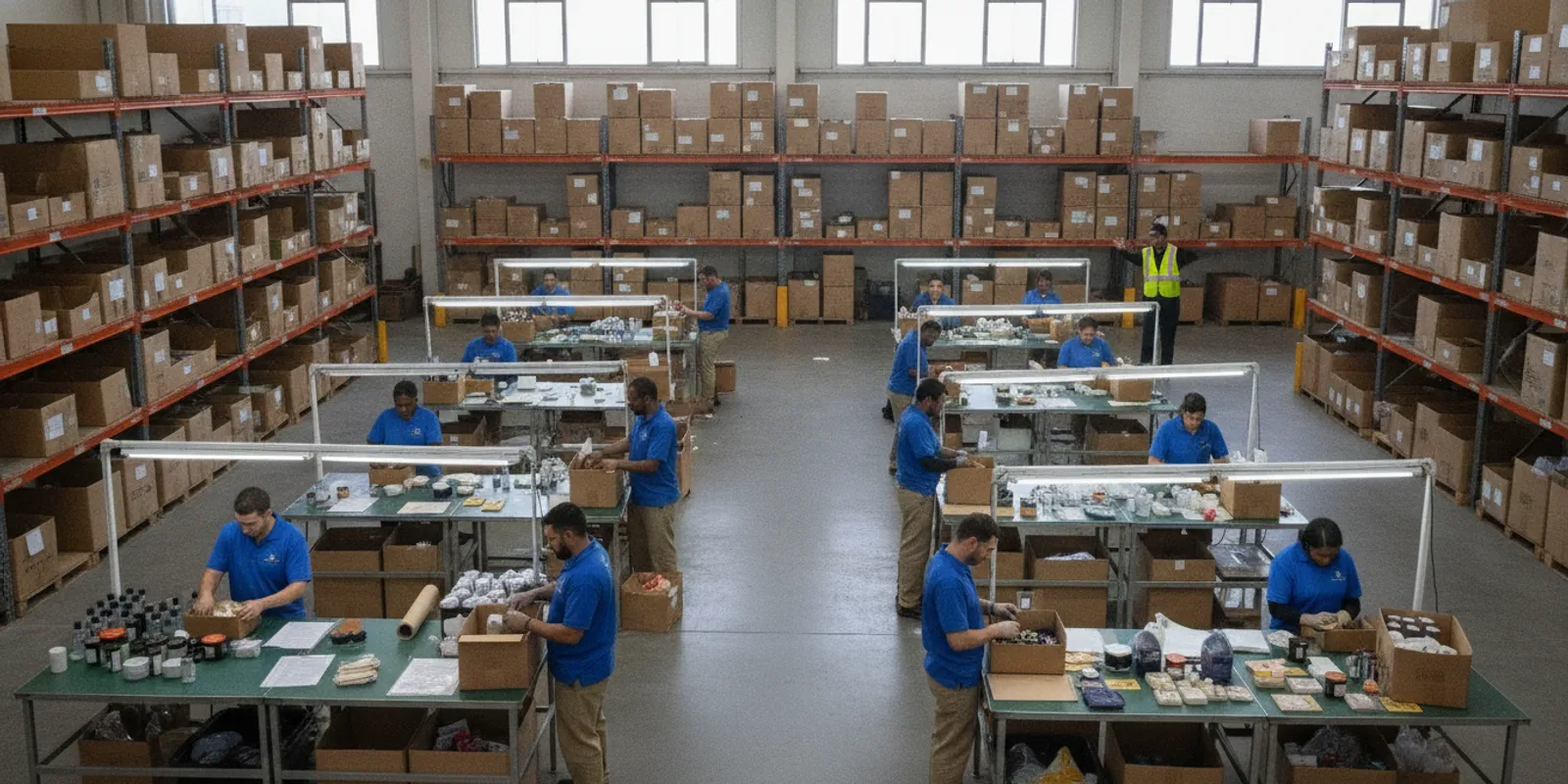
Busy periods place several demands on the same operation. Order counts may rise, individual orders may contain more items, promotional assortments may change, and inbound inventory may arrive in waves. A provider may need to receive cartons, record stock, assemble kits, label products, pack orders, and prepare shipments while also keeping routine work moving.
Describe your operation before asking providers to describe their capabilities. Gather weekly order history, product and kit dimensions, lines per order, expected promotions, shipping destinations, packaging requirements, and known special handling. Identify what is confirmed and what remains a forecast. A useful comparison asks each candidate to plan against the same facts and uncertainties. For background on the fulfillment operation, review Volk Sanford and then ask which parts of its services match your requirements.
Be specific about the work you expect to outsource. For example, “handle more orders” is not as useful as “receive three component types, assemble one of two seasonal kits, apply a destination label, and ship a mix of single-item and multi-item orders.” The more accurately you describe the workflow, the easier it is to find a partner whose operating model suits it.
How can you evaluate capacity before a peak?
Capacity is more than a single order-per-day figure. It depends on order lines, product handling, assembly time, receiving volume, storage space, packaging steps, staffing, and carrier handoff. Ask how the provider converts your demand information into a plan for labor, space, and work sequencing. Ask what assumptions sit behind that plan and which constraint could become a bottleneck first.
- Forecast range: Can the provider plan a base case and a higher-demand case, and how will changes be shared?
- Labor and training: How does it prepare staff for the steps and variations in your process?
- Space: Where will inbound inventory, components, finished kits, and packed orders be staged?
- Work sequence: How will receiving, kitting, picking, packing, and dispatch be coordinated?
- Constraints: What could limit throughput, and when will the provider tell you that a planned volume is at risk?
- Recovery: What options are available if a forecast changes sharply or inventory arrives late?
Provide more than a seasonal total. A weekly forecast helps reveal whether a surge is brief or sustained. Add likely promotion dates and expected units per order. If you have different product families, separate their demand where their handling steps differ. A hundred simple single-item orders do not create the same workload as a hundred multi-line orders that each need assembly, inserts, and a special label.
Ask the provider to walk through a high-volume week. What arrives each day? Which orders are prioritized? How does work move between stations? What must be complete before the shipping cutoff? The answers should describe a workable process, not only a capacity figure. Agree on when you must provide updated forecasts or approve operational changes.
How should inventory visibility work?
Visibility matters when a finished kit depends on several components. Ask how the provider records inbound receipts, available quantities, allocations, damaged or held items, and stock committed to open orders. Find out how frequently inventory data is updated, which people can view it, and how discrepancies are reported and resolved.
Walk through a realistic shortage. One component arrives late while the other kit parts are already in storage. What status will your team see? Who contacts you, and how soon? Can the provider hold the kit, assemble other orders, use a substitute, or ship a partial order? Which of those actions require your written approval? Define the rules before the season; a rushed substitution can create a customer-service problem even when it keeps an order moving.
Inventory visibility also depends on shared definitions. Agree what “available” means, how damaged units are separated, and whether quantities are shown as received, allocated, or free to promise. Set a process for cycle counts or discrepancy reviews that fits your product risk and order volume. If the provider’s data and your sales system disagree, name the person who investigates and the expected next update. You can also review how packaging logistics fit alongside inventory movement and order preparation.
Review the provider’s scope for Volk Sanford fulfillment services when considering picking, packing, shipping, kitting, labeling, inventory management, warehousing, or contract packaging. Confirm which tasks, systems, and reporting are included for your situation rather than assuming every operation is identical.
What should you ask about kitting and labeling?
Kitting introduces repeatable work steps that should be documented and checked. Share a bill of materials for every kit, approved quantities, a physical sample when available, and clear instructions for variations. Ask how the provider will pick the components, verify counts, assemble the kit, identify the finished unit, and record it in inventory.
- How are kit instructions versioned, approved, and distributed to the people doing the work?
- What check confirms that every required component is present?
- How are missing, damaged, or replaced components handled and recorded?
- How are finished kits identified so similar versions are not confused?
- What does the provider do with leftover or obsolete kits after a promotion?
- How are labeling changes approved, and how is the previous version removed from use?
Labeling should be specific enough to inspect. Supply approved artwork, barcode or identification requirements, placement rules, destination-specific details, and the person who signs off on revisions. If two products look alike, use a clear identifier in the instruction and, where appropriate, a distinct staging or scanning step. Run a sample batch and check a completed kit against the approved specification before releasing the full volume.
Packaging is part of this review, too. Confirm the outer carton, protective materials, inserts, and presentation requirements for each order type. A package designed for one item may not protect a multi-item kit or fit a different assortment. If box specifications or branded packaging are changing, review custom corrugated boxes and packaging supplies early enough to test the pack-out and align supply timing with the forecast.
How do shipping workflows affect peak performance?
Trace the order from release to carrier handoff. Confirm how orders enter the provider’s workflow, how errors or holds are identified, how packaging instructions are applied, and how tracking information returns to your systems or team. For sales across multiple channels, agree how channel-specific service levels, labels, and packing rules are distinguished.
Clarify daily cutoffs and the treatment of orders received afterward. Discuss address issues, backorders, expedited requests, fraud or customer-service holds, split shipments, and canceled orders. Identify which party communicates with the customer when an exception affects dispatch. Your written process should separate what the provider can resolve independently from decisions that require your approval.
Do not evaluate shipping only by the label-printing step. Ask how packed orders are staged, how carrier pickups are coordinated, what happens when a pickup is delayed, and how end-of-day exceptions are escalated. The goal is to understand the handoff and the information you will receive when an order leaves the facility, not to assume the provider controls every part of transit.
For U.S. online sellers, shipment promises and delay notices are also part of customer-facing operations. The Federal Trade Commission is the federal agency responsible for consumer-protection matters; include a review of applicable shipping-promise obligations in your procedures and consult the agency’s business resources or qualified counsel for the rules that apply to your sales. A fulfillment partner should know how your agreed shipping timeline and exception process are meant to work, while your business remains responsible for the commitments it makes to customers.
| Workflow area | Questions to resolve | Evidence to request |
|---|---|---|
| Order intake | How are orders received, prioritized, and checked? | Example flow and exception procedure |
| Inventory | How are receipts, allocations, holds, and discrepancies recorded? | Sample status report or system view |
| Kitting | How are components counted and finished kits identified? | Current instructions and sample pack-out |
| Labeling | Who approves files, placement, and revision changes? | Approved label specification and change process |
| Shipping | What are the cutoff, handoff, and tracking procedures? | Documented dispatch flow and escalation contacts |
| Peak planning | How are forecast changes and capacity risks addressed? | Planning calendar and review cadence |
What does strong communication look like during a busy season?
Communication should be timely, operational, and connected to decisions. Identify a primary contact and backup on each side, a routine meeting or update cadence, and an escalation path for urgent issues. Agree which events require immediate notice: a component shortage, inventory mismatch, system interruption, damaged inbound shipment, or risk to a promised dispatch date.
Choose a concise reporting format before the first surge. A useful seasonal update can show inbound inventory status, open orders, kits completed, exceptions needing approval, and upcoming demand changes. Decide when the update will be sent, who reviews it, and what counts as a response. A report is only useful if someone owns the next action.
Try a short scenario exercise. Tell the provider that one component is delayed and a promotion starts sooner than expected. Ask what information it needs from you, what work it can continue, which options require approval, and when it will provide its next update. The exercise often reveals whether escalation roles and decision authority are clear enough for a real peak.
How should you plan before seasonal demand rises?
Work backward from the first expected shipment, leaving time for product decisions, packaging, purchase orders, inbound transit, receiving, test orders, and corrections. The calendar depends on your suppliers and products, so build it with the provider and the people responsible for inventory, marketing, customer service, and transportation. Include milestones for decisions, not just dates when stock is expected to arrive.
- Share demand assumptions. Provide historical order patterns, planned campaigns, likely units per order, and a range for uncertain demand.
- Freeze product details. Confirm the bill of materials, kit variants, labeling files, protective packaging, and pack-out instructions.
- Set inventory milestones. Agree on arrival dates, receiving expectations, and how shortages or damaged cartons will be reported.
- Test the workflow. Run sample orders through receipt, assembly, packing, and shipment preparation; inspect the finished result.
- Schedule forecast reviews. Revisit assumptions at agreed intervals and make changes through a documented approval path.
- Plan the closeout. Decide how to handle returns, leftover seasonal stock, obsolete promotional components, and the transition back to routine volume.
A test order should resemble the real work. Include the most complicated kit, an order with multiple products, and any special label or packing configuration. Check not only whether the correct items are present, but also whether the package protects the contents, the shipping label is legible and correctly placed, and the resulting inventory status is accurate. Record corrections, update the work instructions, and repeat the test if a change affects the process.
Packaging decisions deserve enough lead time for specifications and supply. If custom packaging is part of the seasonal offer, review the intended product protection, presentation, and assembly steps together with the fulfillment workflow. A box or insert change can affect storage and packing time as well as the customer experience. See the seasonal product packaging planning guide for related planning considerations.
How can you compare providers fairly?
There is no universal best provider for every seasonal operation. Compare candidates against the same requirements, and distinguish a demonstrated process from a general promise. A simple scorecard helps your team discuss trade-offs. Set the importance of each category according to your product and service priorities, then record evidence and unanswered questions beside each score. If the first decision is whether to outsource at all, the 3PL versus in-house fulfillment guide can help frame that separate comparison.
| Evaluation category | What a strong response includes | Follow-up question |
|---|---|---|
| Capacity planning | Forecast assumptions, constraints, staffing and space plan | What change would trigger a capacity warning? |
| Inventory visibility | Defined stock statuses, update frequency, discrepancy handling | Who investigates a mismatch and reports back? |
| Kitting quality | Approved instructions, component checks, exception handling | How are revisions controlled on the floor? |
| Shipping workflow | Intake, cutoffs, handoff, tracking, and escalation described | What happens after cutoff or a missed pickup? |
| Communication | Named contacts, routine updates, and urgent escalation route | Who can approve an operational change? |
| Packaging fit | Pack-out matches product protection and presentation needs | Can we inspect a sample before the seasonal run? |
Ask candidates to respond to one shared case, such as a sudden increase in demand while one kit component is constrained. Compare how each would communicate the risk, protect existing orders, seek your approval, and keep inventory information current. This makes the evaluation more concrete than a general presentation and can expose differences in process discipline.
Request a proposal based on forecast ranges, specifications, channels, packaging, and service scope. Providers may structure their work differently, so compare like with like and document exclusions or assumptions. For B2B and ecommerce fulfillment inquiries, review the fulfillment quote process and prepare the operational details needed to discuss fit. Volk Sanford offers picking, packing, shipping, kitting, labeling, inventory management, warehousing, and contract packaging services; the appropriate scope depends on the requirements of each operation.
What does a seasonal evaluation look like in practice?
Consider a business planning a four-week promotion with two bundles: one contains three standard products, while the other adds a printed insert and a fragile item. The company expects its weekly orders to rise, but the mix between bundles is uncertain. Its evaluation should provide both bundle definitions, expected weekly ranges, arrival dates for each component, packaging requirements, and the desired dispatch cutoff. A provider can then explain the labor and storage assumptions behind its plan instead of responding to a vague peak estimate.
Next, test a plausible disruption. Suppose the fragile item arrives late and the promotion is already underway. Ask whether the provider can continue to fulfill the standard bundle, how it will keep the two bundle inventories distinct, and what status your team will see for orders waiting on the missing component. Agree whether substitutions, split shipments, or delayed orders need your approval. Record the decision tree and the person who will notify customer service.
Finally, test the revised kit with a sample order. Check the component count, insert version, protection for the fragile item, label placement, carton choice, and inventory transaction. Then confirm that the order record and tracking update follow the agreed path. This small exercise exposes unclear instructions and data handoffs while there is still time to correct them. It also gives both teams a concrete reference for training and follow-up.
What should you confirm before choosing a partner?
Before making a decision, write down the responsibilities and assumptions behind the plan. Confirm who owns inventory, who supplies packaging and labels, how receiving discrepancies are handled, which party approves kit changes, and how orders are prioritized. Document data access, reporting, shipping cutoffs, escalation contacts, and the process for revising the forecast.
Review what happens at the edges of the relationship, too. How are returns received and classified? Who decides whether a returned item can go back into available inventory? What happens to leftover campaign materials? How are open orders treated if a product is temporarily unavailable? These questions may not dominate a normal week, but clear answers help avoid improvised decisions in a busy period.
A controlled pilot can be valuable when the workflow is new, the kit has many components, or several channels require different pack-outs. Use real products and final instructions. Inspect a sample across each meaningful variation, record errors or confusing steps, and update the work instructions before scaling. Ask the provider to identify the person responsible for confirming that the approved process is the one in use.
Finally, decide how success will be reviewed after the season. Choose operational measures that both teams can observe, such as order exceptions, inventory discrepancies, kit rework, or the timeliness of agreed updates. Review causes as well as outcomes. The purpose is to improve the next plan, not to rely on a single headline number detached from order mix and agreed scope.
Contact us to discuss your fulfillment requirements
Plan seasonal fulfillment around the work
The best seasonal partner is the one that can explain how its people, inventory controls, kitting instructions, packaging, shipping handoffs, and communication will support your actual order pattern. Compare providers with the same forecast and a practical test case, settle decision roles early, and verify the workflow before demand rises. A clear plan gives both teams a better basis for handling the busy season together.