
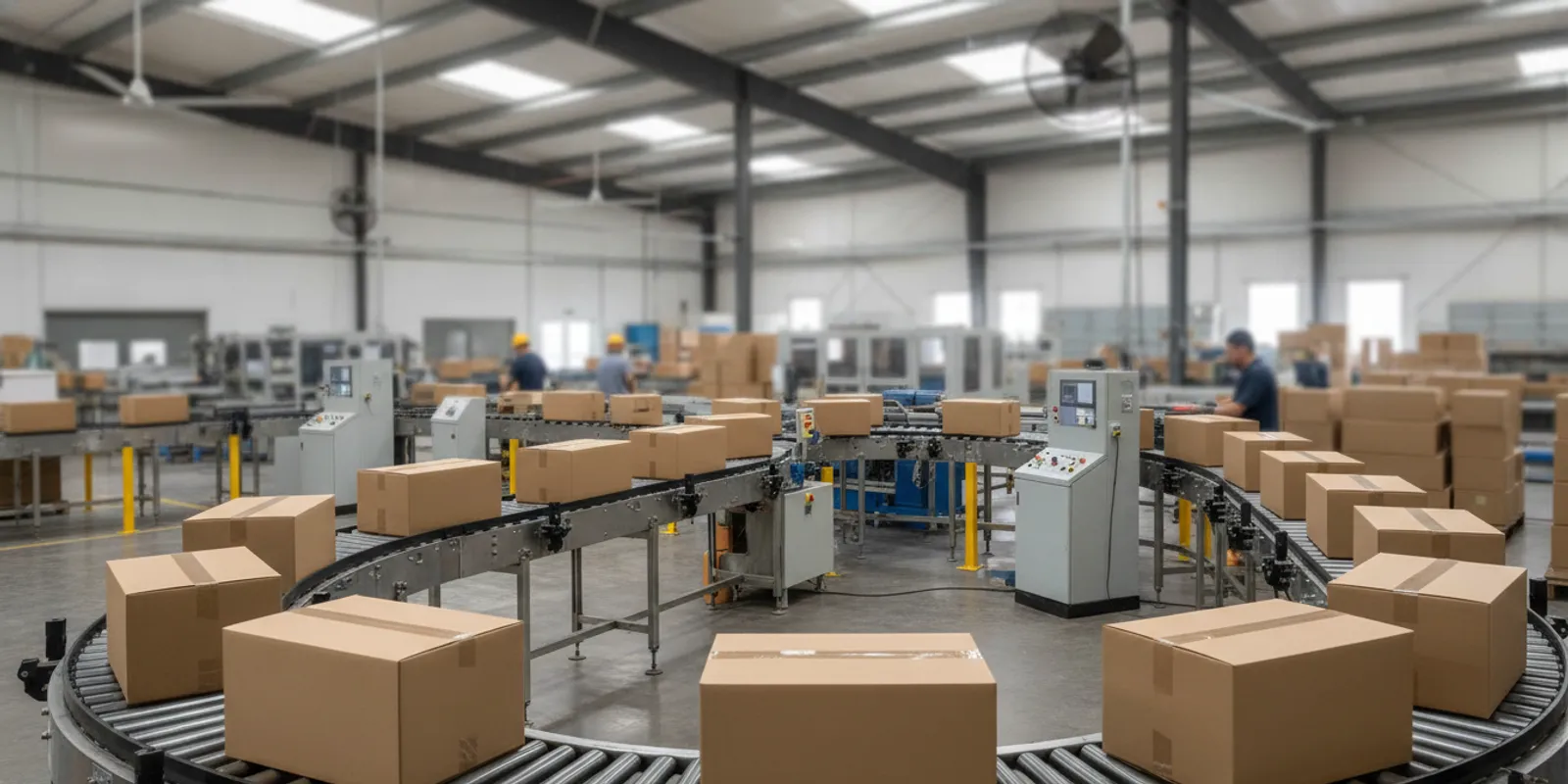
Packaging technology solutions can help a business protect products, present them consistently, and move orders through production with fewer avoidable complications. The right choice is not necessarily the newest machine or software. It is the combination of tools and processes that fits the product, shipping environment, order pattern, and people who use the packaging every day. Explore our boxes and packaging options when comparing formats for your operation.
For manufacturers, distributors, producers, and e-commerce businesses, packaging touches several connected stages: specifying a package, producing it, packing the product, managing inventory, and getting orders out the door. A weak handoff at any stage can cause extra material use, damage risk, production delays, or inconsistent presentation. This guide surveys practical technologies and processes across those stages, then shows how to evaluate them as a system.
What counts as packaging technology?
Packaging technology includes the equipment, materials, design methods, printing systems, data, and operating procedures used to create and manage a package. It can be as hands-on as a protective insert designed around a product, or as integrated as inventory data flowing from an order system into a fulfillment workflow.
It helps to distinguish a technology from the result you need. “Add automation” is not a useful requirement by itself. “Reduce manual handling for a recurring order while preserving pack accuracy” is a more useful goal. That goal can be evaluated against the current process and the available options.
- Design and engineering: translating product dimensions, fragility, and shipping conditions into a suitable package.
- Production: converting packaging specifications into corrugated boxes, printed graphics, protective components, and supplies.
- Testing and feedback: checking how a package performs in handling and shipment, then using results to improve it.
- Operations: storing packaging, preparing orders, kitting components, labeling, and coordinating shipments.
- Information: keeping specifications, revisions, quantities, and order details consistent across teams and partners.
These categories overlap. A better box design may reduce packing steps. A clearer specification may prevent an obsolete version from being ordered. A fulfillment partner may flag recurring packing issues that were invisible when shipping was handled elsewhere.
Which packaging problem should you solve first?
Begin with a specific operational or customer problem. The same technology can be useful in one setting and unnecessary in another. A high-volume manufacturer may prioritize repeatable production and print consistency. A growing online seller may care more about order variability, storage space, and fast pack-out. A producer shipping a fragile item may focus first on product protection.
Write down the current condition before comparing solutions. Include the product or order involved, the process step, who performs it, what goes wrong, and how often the team sees the issue. Use existing records where available: damage reports, rework notes, pack times, order errors, stockouts, or customer feedback. Avoid treating an estimate as a measured result; label assumptions clearly.
| Need or pain point | Technology or process to examine | Evidence to review |
|---|---|---|
| Product movement or damage in transit | Package design, corrugated strength selection, foam packaging, and fit testing | Damage reports, product movement, packing method, shipment conditions |
| Inconsistent appearance across runs | Artwork control and digital or flexographic printing selection | Approved files, color or layout expectations, order quantities, revision history |
| Slow or error-prone packing | Box sizing, workstation layout, kitting, labeling, and clear work instructions | Pack steps, order accuracy, material changes, staff observations |
| Packaging stockouts or excess stock | Inventory visibility, reorder practices, and demand review | Usage history, lead times, minimum quantities, storage constraints |
| Complex order handling | Fulfillment workflow and system integration | Order sources, SKU data, exception handling, shipping requirements |
Use the table as a starting point, not a promise that one tool fixes every issue. For example, damage may result from an unsuitable package, poor pack technique, a shipping hazard, or a combination. Diagnose the cause before buying equipment or changing materials.
How can packaging technology solutions improve package fit?
Packaging design starts with the item and how it will be handled. Gather the product’s dimensions and weight, note fragile or sensitive areas, and identify how it is stored, picked, packed, and shipped. Include the product’s orientation, accessories, presentation needs, and any protective components. If products vary, specify the range rather than designing around an average that no real item matches.
Corrugated packaging can be configured to suit an application rather than relying on a generic carton for every product. Custom corrugated boxes can address size, closure, stacking, printing, and packing requirements. Foam packaging can be considered where cushioning or separation is needed. Stock boxes may be an appropriate fit for standard products and repeatable needs. The right choice depends on the whole use case, including available packing space and how the package travels.
A useful design review makes the assumptions visible. Record dimensions, board or material specifications when known, insert placement, closure method, artwork version, and intended packing sequence. Ask the people who pack the item to review the design. They can identify awkward folds, difficult closures, or unnecessary steps that may not be obvious from a drawing.
Teams can review box dimensions as part of early planning, then discuss application-specific needs with a packaging professional. For custom work, the packaging prototype process can help move from an initial idea toward a sample and production-ready specifications. A prototype is useful when it answers a question: Does the product fit? Can the team pack it consistently? Does the opening and presentation meet expectations?
How should printing technology fit the job?
Printed packaging has both a practical and a presentation role. It can identify a product, communicate handling information, and support a consistent brand experience. Before selecting a printing approach, confirm what must appear on the box, what artwork is approved, how often it changes, and the order quantity and schedule.
Digital and flexographic printing are production options with different operating considerations. Rather than assuming one is universally better, discuss the job’s volume, artwork, required consistency, and repeat-order plans with the packaging supplier. A design with frequently changing details may call for a different production conversation than a stable graphic used across large recurring orders.
Good file and revision control is just as important as the press. Assign an owner to approve artwork, identify the current file, and record the effective date or order associated with a revision. Make obsolete versions easy to distinguish from approved ones. When a change is made, check whether it affects carton dimensions, labels, inserts, or packing instructions as well as the printed panel.
For a closer look at one production method, review flexographic printing services. Regardless of method, request a clear review of the intended appearance and production constraints before committing to a run.
What should product protection testing examine?
A package should be evaluated in the conditions that matter to the product and its route to the customer. Start by listing likely stresses: handling, vibration, compression, stacking, moisture exposure, or repeated transfers. Not every product faces every condition, and a test should reflect the actual distribution path as closely as practical.
Set a simple test plan before comparing alternatives. Use the same product configuration and packing method each time. Record package materials, dimensions, closure, orientation, and the test conditions. Inspect the product and package for predefined signs of failure. If a package is damaged, document where the failure occurred and whether the contents moved or were affected. Repeatability matters: an informal one-off test may reveal a concern, but it is not a complete performance picture.
Consider these questions during a review:
- Does the product stay in the intended position?
- Are edges, corners, or delicate components exposed?
- Can the package be closed securely using the intended packing method?
- Does the package remain practical to store, pick, and handle?
- What do previous shipment issues suggest about where to focus?
Testing should inform design changes rather than merely produce a pass-or-fail label. A result may point to better fit, a revised insert, improved packing instructions, or a different material choice. If a test involves specialized equipment or a formal compliance requirement, work with qualified testing resources and confirm the applicable protocol for the product and market. Do not assume a generic test covers every shipping scenario.
Packaging technology is a broad engineering field concerned with designing and using packaging systems. For general background, see the Journal of Packaging Technology and Research. Apply technical information to your own product and shipping conditions rather than treating general examples as a specification.
How can packaging inventory and information systems help?
Packaging stock is easy to overlook until a box is missing or an outdated version is used. Start by identifying each packaging item in use, its purpose, where it is stored, and which products or orders consume it. Standardize naming so purchasing, production, and fulfillment teams refer to the same item in the same way.
A useful inventory record can include a unique item name or code, dimensions, approved specification, current artwork revision, storage location, supplier, typical usage, and reorder owner. Add lead-time and order constraints when known. Keep the list proportional to the operation: an organized spreadsheet may be adequate for a small, stable range, while complex or high-volume activity may benefit from a system integrated with order and inventory workflows.
Whatever the tool, define who updates it and when. A record that is not maintained can create a false sense of control. Review packaging items when products change, orders shift, or a supplier specification is revised. Separate approved stock from obsolete or quarantined material so it cannot be picked by mistake.
For each item, establish a replenishment approach based on actual use and supply conditions. Avoid choosing a reorder point solely by habit. Compare usage patterns, expected demand, lead time, storage capacity, and the consequence of a shortage. For seasonal or launch-related changes, coordinate packaging needs with product and order plans early enough to review artwork, samples, and production timing.
When does automation or fulfillment technology make sense?
Automation is worth evaluating when a task is repetitive, sufficiently predictable, and creating a real constraint. It may not be the right answer when order mix changes frequently, exceptions dominate, or the underlying package and process are not yet stable. First map the work: how an order arrives, how inventory is located, how items are picked, how the package is selected, what is packed, and how the shipment is labeled and dispatched.
Look for avoidable handoffs and repeated data entry. A system connection can help only when the information is accurate and teams agree on how exceptions are handled. Confirm which system owns product dimensions, packaging instructions, inventory counts, and shipment details. Test unusual orders as well as the routine case. A workflow that works only when every order is identical may fail during a promotion or product change.
Businesses that outsource some or all order handling should compare the fit of an outside fulfillment workflow with in-house operations. Volk Sanford provides fulfillment services that include picking, packing, shipping, kitting, labeling, inventory management, warehousing, and contract packaging. Review Volk Sanford fulfillment services and consider how packaging specifications and fulfillment procedures can work together. For a structured comparison of operating models, see 3PL versus in-house fulfillment.
Before changing systems or partners, document the service expectations that matter: order types, packaging instructions, inventory visibility, exception handling, communication, and shipping destinations. Clarify how changes are requested and approved. An operational conversation should cover the ordinary order as well as returns, substitutions, shortages, and urgent changes.
How should you compare packaging technology solutions?
Use a consistent evaluation process instead of choosing based on a product demonstration alone. First define the problem and the current baseline. Then set requirements, test a representative option, and estimate the full operational impact. Include the people who specify, buy, store, pack, and receive the packaging. Their perspectives often reveal requirements that a single department misses.
- Define the use case. Specify the product, order pattern, shipping conditions, and process step that needs improvement.
- Separate must-haves from preferences. Identify requirements for fit, protection, print, storage, packing, data, and timing.
- Compare practical alternatives. Consider a process change, stock packaging, a custom design, a material or print change, equipment, or an external service.
- Review the whole workflow. Check storage, replenishment, packing labor, revision control, and downstream handling, not just the purchase itself.
- Run a representative trial. Use realistic products, order patterns, and staff procedures. Record what is measured and what is assumed.
- Agree on review criteria. Decide how the team will judge product condition, order accuracy, ease of use, material consumption, and process reliability.
- Plan implementation. Assign owners for specifications, training, inventory updates, and follow-up. Keep a rollback or correction path where feasible.
Cost should be evaluated without inventing a single headline number. Consider the total work involved: packaging material, storage, handling, production setup, training, waste, damage response, and system upkeep. Some effects are easy to count; others require observation or a trial. Write down the assumptions so the team can update them as experience accumulates.
How can sustainability fit into technology decisions?
Evaluate sustainability alongside performance and operational fit. Begin with the package’s purpose: protect the product and support safe, dependable delivery. Then look for avoidable excess, materials that complicate handling, and opportunities to use packaging appropriately for the application. A lighter or smaller package is not an improvement if it causes product damage or cannot be packed reliably.
Ask suppliers what material and certification information is available for the specific packaging under consideration. Volk Packaging offers FSC- and SFI-certified packaging, uses water-based inks, and has a long-standing corrugated recycling practice. Its sustainability approach is described on the sustainability page. Match any environmental claim to the actual product, material, and supporting documentation; avoid broad claims that are not substantiated.
For each proposed change, record the intended benefit and a way to review it. This might include package fit, material use, packing steps, or whether the package can enter the relevant recovery stream. Consider the customer’s local disposal context and the actual packaging components, including labels, coatings, and inserts. Make the decision with the whole package in view, not one material in isolation.
What should a practical implementation plan include?
Even a good solution can falter without clear ownership and a controlled rollout. Keep the first implementation focused. Choose a product or order family that represents the real challenge but is manageable enough to review closely.
- Specification: document dimensions, materials, artwork, closure, inserts, and packing sequence as applicable.
- Approval: name the people who approve design, artwork, and operational changes.
- Inventory: identify existing stock, new stock, obsolete items, reorder responsibilities, and storage locations.
- Training: show staff the intended packing method and explain what to do when an order does not match instructions.
- Measurement: capture baseline and trial observations using the same definitions where possible.
- Review: gather feedback from production, fulfillment, customer service, and recipients when available.
- Revision control: record what changed, when it became effective, and which older version is no longer approved.
After the trial, decide whether to adopt, revise, or stop the change. If the result is mixed, identify the specific cause before expanding. A packaging solution should make the real work more dependable, not simply add another system that teams must maintain.
Share your packaging requirements
Frequently asked questions
Are packaging technology solutions only for large manufacturers?
No. The right level of technology depends on the scale and complexity of the packaging task. A smaller operation may benefit from a documented specification, a better-fitting stock box, and an organized inventory list. More complex operations may need custom design, production planning, or coordinated fulfillment workflows.
Should we choose custom boxes or stock boxes?
Compare product fit, protection, packing steps, storage, and repeat-order needs. Stock boxes can suit standard dimensions and stable requirements. Custom corrugated boxes may be worth evaluating when the product, protective needs, printing, or packing workflow calls for a more tailored design.
How do we know whether a package protects the product?
Review previous shipment outcomes, inspect how the product fits, and test a realistic package configuration against the handling conditions that matter. Define the failure signs before testing and record the setup. For formal or specialized testing requirements, confirm the appropriate protocol with qualified resources.
When should a business consider outsourced fulfillment?
Consider it when order handling, storage, staffing, or coordination has become a constraint, and compare the outside workflow with your in-house requirements. Examine inventory visibility, pick-and-pack procedures, packaging instructions, order exceptions, and communication before deciding.
What is the best first step?
Choose one recurring packaging problem and document the current process. Gather the product and order details, identify what success would look like, and invite the people who handle the work to review possible changes.
Packaging technology works best when it serves a defined need and connects design, production, and daily operations. A careful comparison can help your team choose practical improvements that protect products and support a dependable customer experience.