
Custom boxes with logo can help identify a shipment, protect its contents, and give customers a consistent brand experience. A strong design begins with the product and its route, then brings together box format, artwork, print method, and packing requirements. For a box to work in daily use, the graphics must fit the physical package and the way your team handles it.
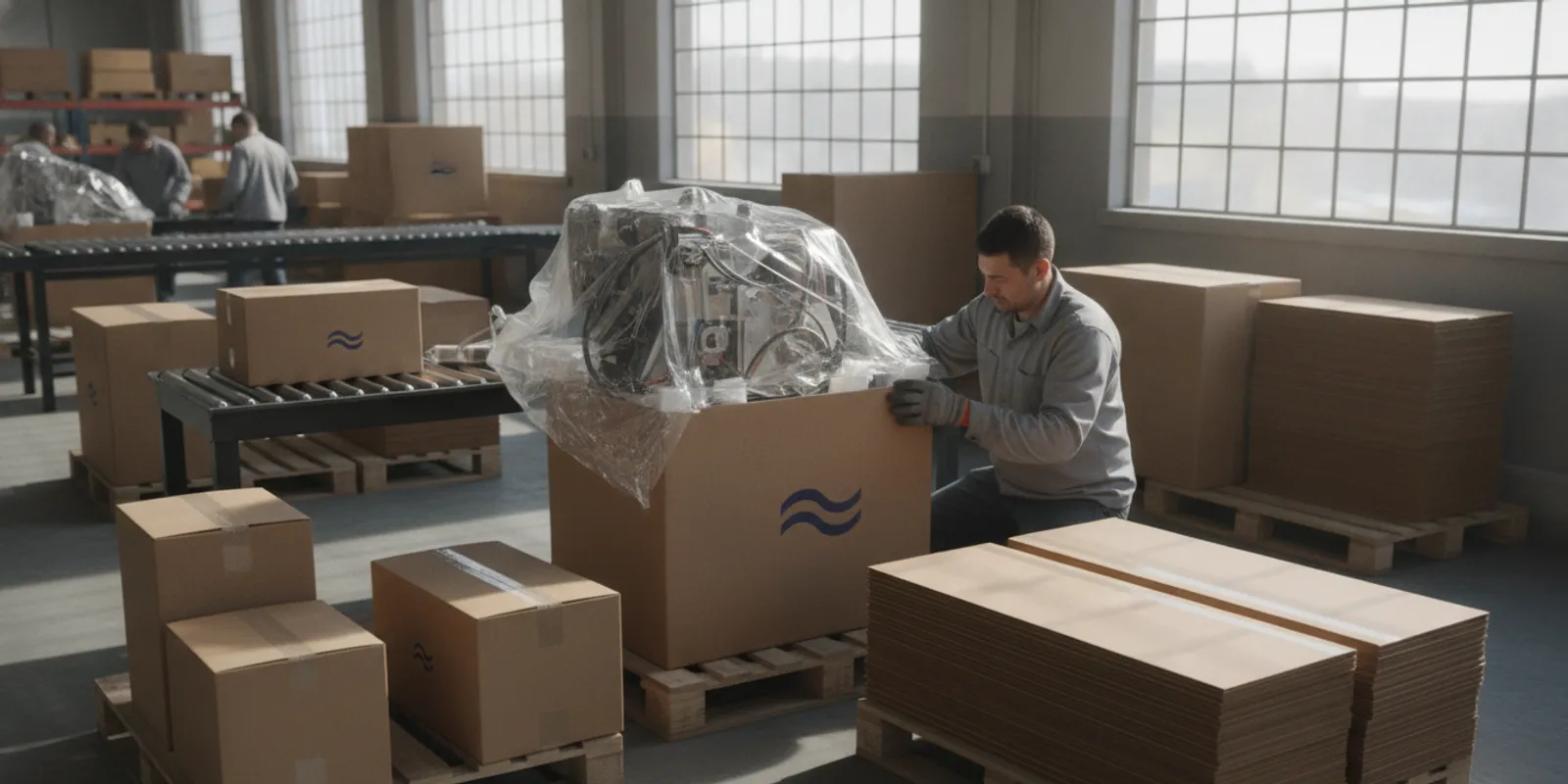
What should a branded box accomplish?
Before choosing colors or placing a logo, define the jobs the package needs to do. A box may travel through parcel networks, move between business locations, sit in storage, present a product at a trade event, or hold a kit of several items. These uses create different design priorities. A shipment may need clear handling information and durable closure. A retail or sample package may need a considered opening sequence. A recurring business-to-business shipment may prioritize fast, repeatable packing.
Write down the goals in practical terms. For example: “The product should stay in place during normal shipping,” “the order picker should identify the correct version quickly,” or “the customer should see the brand when opening the lid.” Concrete goals are easier to evaluate than broad requests such as “make it look premium.” They also help keep artwork decisions connected to product protection and operations.
Ask three questions before a design conversation:
- What product or combination of products goes inside, and what needs protection?
- How will staff pack, store, handle, and ship the box?
- What should the recipient or the next person in the process understand at a glance?
Volk Packaging is a third-generation, family-owned corrugated packaging manufacturer and distributor serving New England since 1967. It provides custom corrugated boxes, stock boxes, packaging supplies, foam packaging, and printing options. The right starting point depends on the application: a custom box may address a specific fit or presentation need, while a stock box may be suitable when standard dimensions work. Explore custom corrugated boxes and packaging supplies as you identify the options to discuss.
How do dimensions and box format shape the design?
A logo is only one part of a successful package. First establish the product’s actual dimensions, orientation, and packing arrangement. Include any protective wrap, foam insert, divider, instruction sheet, or other component that stays inside the box. Measuring only the bare product can lead to a specification that is too tight once the full pack-out is assembled.
Record length, width, and height, and note which face should point up. If the product has a handle, projection, fragile edge, or parts that can move, describe it. For a multi-item order, draw or photograph the arrangement. A simple top-down sketch can show whether components sit side by side, stack, or need separate compartments. A packaging partner can use those details to discuss box style and interior protection.
Then run a physical packing trial. Use a representative product and the materials staff actually use. Check whether the product loads smoothly, whether the box closes without force, and whether the contents move when the package is handled. Record where the fit feels loose or tight. A test should also reveal whether an employee must hold several pieces in place while closing the box, which can slow a repeatable task.
Think about the outer dimensions as well as interior fit. Box size can affect shelf and warehouse storage, pallet arrangement, parcel handling, and the space available at a packing station. The goal is not simply to make the box as small as possible. It is to choose a practical format that holds the product and protective materials, closes correctly, and fits the shipping and storage process.
| Decision area | Information to review | Practical check |
|---|---|---|
| Box format and size | Product dimensions, orientation, inserts, and closure | Pack a representative order and inspect fit |
| Logo placement | Panels, folds, seams, labels, and opening direction | Review an assembled-box panel map |
| Printing approach | Artwork detail, colors, quantity, and repeat pattern | Discuss the actual job rather than choosing by name |
| Protection | Product weight, fragility, movement, and route | Check whether the contents shift during handling |
| Packing workflow | Assembly, labels, inserts, and storage | Time and document the normal pack-out steps |
If you are still working out dimensions, Volk’s box size calculator can help organize measurements as an early planning aid. Confirm final specifications against the packed product and construction rather than treating an initial estimate as an approved box size.
Where should the logo go on the box?
Plan the artwork on an assembled box, not only on a flat design file. A graphic that looks centered on a panel in a layout can cross a fold, sit too close to a seam, or end up beneath a flap. Identify the top, bottom, front, back, and sides from the perspective of an assembled package. Then decide which face is most likely to be seen during storage, shipment, or opening.
Make a simple panel map and annotate it with the primary logo position, any secondary identification, and areas to leave clear. Note score lines, joints, slots, closures, and places where the shipping label or a handling label is applied. Where the box is stored in rows or stacked, consider whether the side panel needs a product name or version identifier that staff can see without moving the package.
Think about reading order. The logo may share space with a product identifier, an instruction, a return detail, or a label added during fulfillment. Decide which information is essential and which is optional. Use visual emphasis to make the key message clear, and avoid putting small details where folds or handling could make them difficult to read. If a shipping label will cover a panel, reserve that area rather than hoping the label will land elsewhere.
Corrugated board has a surface and natural appearance that differ from coated paper. Design for the chosen material and print approach. Share approved brand files and color references early, and ask how they should be prepared for the selected process. A restrained, high-contrast layout may communicate more clearly than a design with many small elements, especially when the box is viewed at a distance or in a busy receiving area.
Which printing method fits the project?
Digital and flexographic printing are both options for corrugated packaging. Neither method is automatically right for every order. The discussion should include the artwork, number of versions, quantity, repeat-order pattern, and the result you want to achieve. Share the anticipated use and ask what production details affect your particular box.
When might digital printing be considered?
Digital printing can be useful to discuss when a project calls for design flexibility, multiple versions, or detailed graphics. A business preparing a launch, for example, may need separate box artwork for several product families or want to review a branded package before settling on a recurring order pattern. Note how many versions are involved, which elements change between them, and whether the changes are limited to a name or involve a substantially different design.
Prepare the artwork as consistently as possible across versions. Label files clearly, identify the correct size and panel layout, and keep a record of which design is approved for each product. That reduces the risk of packing a product in a box intended for a different item. Discuss the job’s quantity and future use with the packaging provider rather than assuming a process based on a general rule.
When might flexographic printing be considered?
Flexographic printing is a common approach for corrugated packaging and may fit projects with stable artwork and recurring production needs. If a business uses one design for replenishment orders, share how often it expects to reorder and whether the artwork is likely to change. Ask how the number of colors and the layout affect the production plan, and what artwork files are needed.
For either method, define what “approved” means before production. Confirm the box dimensions, print panels, colors, version names, and any required copy. Volk Packaging offers custom packaging and printing; discuss your requirements and the appropriate production approach for the specific project.
How can you review artwork before production?
Gather a vector version of the logo when available, approved colors, brand guidance, required copy, and any symbols or handling information that belong on the box. Include the intended box dimensions and identify the panels to print. If there are multiple product versions, supply a clear naming convention. A file called “final” is not enough if several similar versions are circulating.
Use a review sequence rather than relying on one general visual check:
- Confirm the structure. Match the artwork to the correct box size, style, and panel map.
- Check the content. Verify spelling, product names, directions, and version identifiers against the approved source.
- Inspect placement. Look for conflicts with folds, seams, slots, closures, and label zones.
- Review visibility. Check logo scale, contrast, and the information hierarchy on the assembled package.
- Record approval. Save the approved file, date, box specification, and version together.
If a logo or instruction changes later, separate the revised file from the earlier approved version. Tell the people who order, receive, and pack the boxes which version is current. Keep a sample or reference image where staff can compare incoming packaging with the intended design. These simple controls are especially useful when several products have similar box dimensions but different printed identifiers.
Ask what proof or sample review applies to your project and what it will show. A flat layout helps check panel positions; an assembled sample can help assess fit, orientation, and the opening experience. Review the item that answers the question you are trying to resolve. For example, a proof can catch artwork placement issues, while a physical packing trial can reveal whether the product and insert work together.
How should protection and presentation work together?
Branding should support the central job of the package: getting the product to its destination in usable condition. Consider product weight, shape, fragility, and how the shipment is handled. The solution may be a corrugated box alone, a box with foam packaging or another protective insert, or a stock box combined with separate branded materials. The right choice depends on the product and route, not on appearance alone.
For products with several parts, map how each item sits inside and what prevents it from moving. If the product is already protected by its own case, an additional insert may not be needed. If components can collide, rub, or become separated, note that during the design conversation. Share examples of damage, packing difficulty, or customer feedback when available; specific observations are more helpful than a broad request to “add more protection.”
Run the same pack-out more than once if different staff or shifts will handle it. Watch for steps that depend on guesswork: Does the product have a clear orientation? Can the insert be placed only one way? Is there a simple cue to show that all components are included? Document the order of operations, especially for a kit with multiple pieces. A package that protects the product but is difficult to assemble may create avoidable work for the packing team.
Presentation also includes the opening sequence. Decide whether the recipient should see the logo first, whether instructions or a product card should sit on top, and how the box should open without damaging its contents. A sample shipment can help evaluate these choices. Ask someone who has not seen the design to open it and explain what they notice first. Their experience can identify unclear orientation or information that is hidden by an insert.
What sustainability details should you consider?
Packaging decisions involve material use, printing, protection, and end-of-life handling. Corrugated packaging is widely collected for recycling in many places, but local collection rules and the package’s construction matter. Mixed materials, coatings, adhesives, and local programs can affect what belongs in a recycling stream. For general information about waste and materials, the U.S. Environmental Protection Agency is a starting point at EPA.gov; check the rules that apply to the recipient’s location and the specific package.
Ask what material and print options are available and whether purchasing requirements call for particular certifications. Volk Packaging’s sustainability practices include corrugated recycling, water-based inks, and FSC- and SFI-certified packaging. Review its sustainability practices and discuss what is relevant to your project. Avoid making a broad environmental claim unless the material and end-of-life details support it. A package should still meet protection and operational needs.
Consider the whole pack-out when reviewing material choices. A box that is slightly different in size may change how protective materials are used, while a new insert may affect separation at disposal. Record the components in the finished package and make sure any disposal guidance is accurate for those materials. If the product ships to different markets, check whether instructions need to reflect different local collection systems.
How does fulfillment affect branded box decisions?
Involve the team that packs orders before artwork and specifications are finalized. Box dimensions, assembly, inserts, labels, and instructions influence daily work. A design that looks strong in a meeting may be awkward if the box is difficult to erect, the product must be loaded in a particular order, or a label covers an important identifier.
For a simple example, imagine a distributor shipping two similar components. The outside logo creates a consistent brand presentation, but warehouse staff also need to distinguish the two products quickly. A clear side-panel identifier and a defined label area may help staff select and pack the right version. If a kit changes seasonally, the team should know which contents go with each box and how the updated version is marked.
Packaging manufacturing and fulfillment are distinct needs, even when they are planned together. Volk Sanford offers services such as picking, packing, shipping, kitting, labeling, inventory management, warehousing, and contract packaging. Businesses assessing those activities can review Volk Sanford fulfillment services. Explain whether you need packaging alone or are also evaluating outsourced order handling. For fulfillment questions, use the appropriate Volk Sanford contact path.
If your team packs in-house, document the sequence: assemble the box, add the protective materials, place the product, include documents, close the package, and apply the label. Identify where a branded feature belongs and where operational information must remain visible. If multiple product combinations use the same outer box, create a simple pack-out instruction for each combination and review it whenever contents change.
What should you prepare before requesting a quote?
You do not need to settle every technical detail before asking for a quote. Share what you know and mark what still needs review. A clear request gives the packaging team a practical picture of the product, the desired package, and the order pattern. It can also help identify which decisions require a sample or further discussion.
- Product: dimensions, weight, shape, fragility, and quantity per box.
- Current packaging: what works, what does not, and any known packing or shipping concerns.
- Box needs: approximate size, style, closure, inserts, and protective materials.
- Branding: logo files, colors, printed panels, required wording, and design variations.
- Order pattern: initial quantity, expected replenishment, and any planned product changes.
- Operations: packing method, storage constraints, label placement, inserts, or fulfillment requirements.
Photos of the product and current package can clarify the use case. If you have a sample, explain what you want to retain or change. A short video of the packing sequence can show where staff struggle or where the package needs to be opened. For a new product, a drawing or prototype may help communicate dimensions and orientation. State which measurements are final and which are estimates.
For example, a manufacturer with one recurring shipment might provide a stable product drawing, current box dimensions, an image of the shipping label placement, and expected repeat-order information. An e-commerce business with several kits might instead list each kit’s contents, the order in which pieces are packed, and the artwork differences between versions. Both requests are more useful when they distinguish confirmed requirements from ideas still under review.
Volk Packaging’s packaging quote request is the direct route for packaging inquiries. When preparing the request, include contact details and a clear way to follow up with questions. For a broader picture of the company and its approach, read about the Volk Packaging family.
Frequently asked questions
Can a corrugated box carry a printed logo?
Yes. Custom corrugated boxes can include printed branding. The suitable approach depends on the box, artwork, quantity, and project requirements. Share the intended panels and the assembled-box use so placement can be evaluated in context.
Should I choose digital or flexographic printing?
Neither option fits every project. Compare artwork detail, colors, quantity, repeat-order plans, and the number of versions. Ask a packaging provider to consider those details together for your specific box.
What logo file should I send?
Send a high-quality logo file, preferably vector artwork when available, plus approved brand colors and usage guidance. Identify the box size, panels to print, and any required wording. Keep different design versions clearly labeled.
Should I design the box before choosing its dimensions?
Start with the product and its protective materials, then coordinate the box specification and artwork. A panel map should match the actual box structure so the logo does not land across a fold or beneath a flap.
Can custom boxes be planned with fulfillment?
Yes. Share packing steps, inserts, labels, storage needs, and order mix while the packaging is being planned. If you also need picking, packing, shipping, kitting, or warehousing, describe those as separate fulfillment requirements.
Make the design work across the shipment
Custom boxes with logo work best when fit, protection, artwork, printing, and packing requirements are considered together. Start with the product and the way it moves, then review the assembled box and the daily workflow. A clear specification and a documented approval process make it easier to discuss the right option for your business.
Request A Quote for custom branded boxes
Share your product details, artwork, and shipping requirements with Volk Packaging to begin a practical conversation about a branded box for your operation.