
Packaging logistics is the work of making sure a product’s package fits the way it is stored, handled, prepared, and shipped. For manufacturers and distributors, a packaging choice affects more than the carton: it can influence warehouse space, picking routines, protective materials, packing labor, and outbound planning. Reviewing those steps together helps teams choose packaging that works from the production floor to delivery.
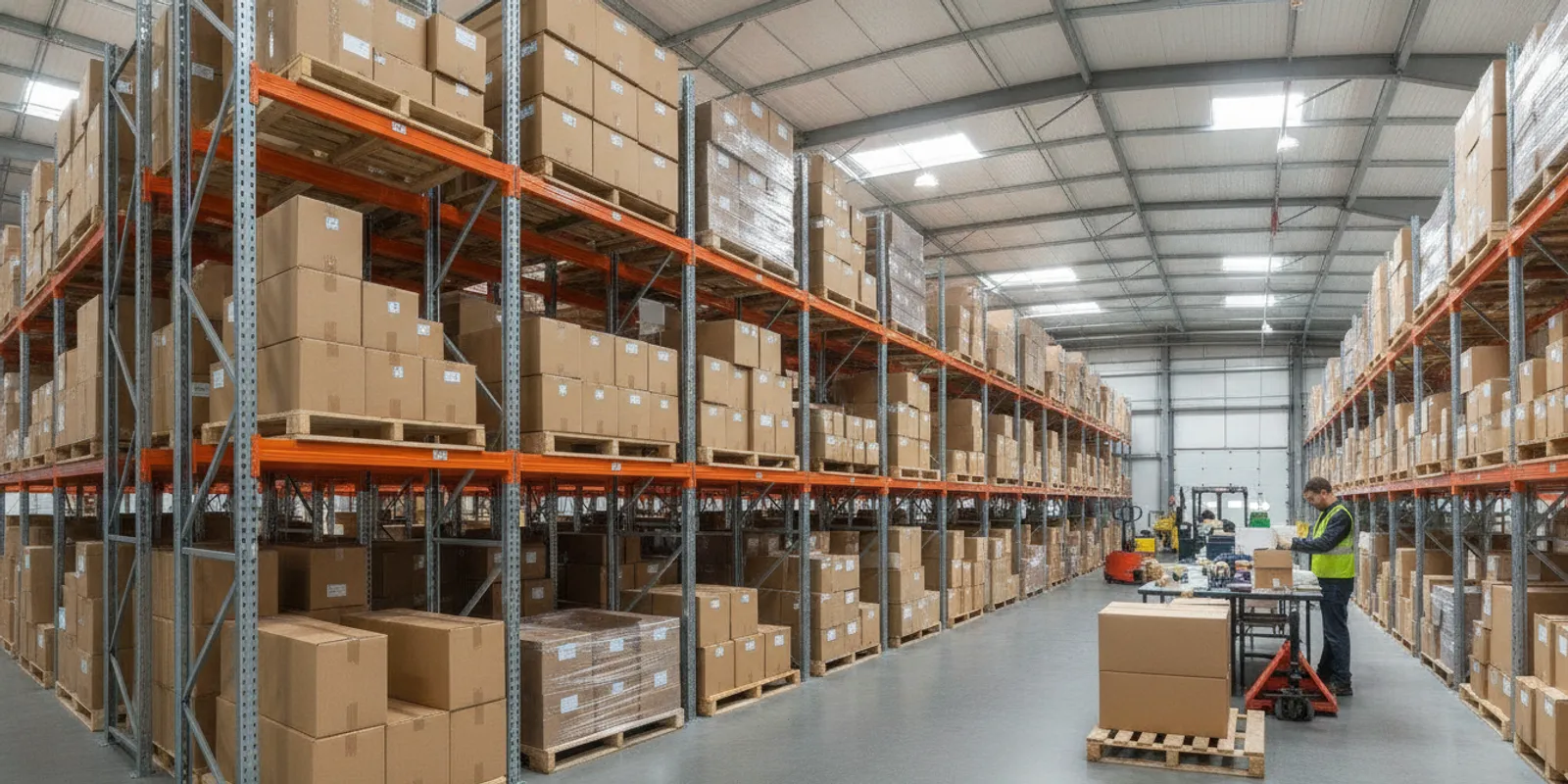
What does packaging logistics include?
Packaging logistics connects the physical package with the movement and management of goods. It includes how products are packed for storage, how cartons or units are identified and handled, how orders are prepared, and how packages are consolidated for shipment. A carton that protects the product but takes up too much shelf space may create one kind of operational issue. A package that is efficient to store but awkward to pick or seal may create another.
The right approach depends on the product, order pattern, handling environment, and shipment destination. A distributor shipping full cases to business customers may have different needs from an e-commerce operation sending individual orders. A producer with one stable product configuration may make a different choice from a manufacturer whose products vary by model or season.
Corrugated packaging is one part of that system. Teams may also need protective inserts, void fill, tape, labels, and other packaging supplies. Where orders are outsourced, packaging decisions also intersect with the fulfillment workflow. Volk Packaging, a third-generation, family-owned corrugated packaging manufacturer and distributor serving New England since 1967, offers complementary fulfillment and contract-packaging services through Volk Sanford.
How can packaging choices affect storage?
Storage planning starts with the package’s dimensions and the way goods move through the facility. Outer carton size affects how products fit on shelves, in bins, on pallets, and in staging areas. If a case is wider or taller than the available storage location, employees may need to use a different slot or handle it as an exception. If a package is much larger than the product requires, it can occupy more storage and handling space than necessary.
Review both the product and the storage method before settling on a box. Confirm the product’s dimensions in its shipping configuration, including any insert or protective wrap. Then consider whether cartons will be stored individually, stacked, placed on pallets, or held in a pick location. A package that fits one storage method may not fit another as well.
- Check the available locations. Measure shelf openings, bins, pallet patterns, and staging areas that matter in the actual workflow.
- Review stacking and access. Consider how cases will be reached and moved, not only whether they fit when placed in storage.
- Account for product variety. If several sizes share a storage area, consistent and clearly distinguishable packaging may help employees identify the right item.
- Plan for empty packaging, too. Where boxes and supplies are kept before use, their storage and replenishment needs belong in the review.
Packaging reduction should not be treated as a box-size exercise alone. The Hong Kong government’s Practical Guides on Packaging Reduction and Management for the Logistics Sector discusses corrugated boxes in relation to storage, transportation, and distribution. The useful takeaway for a packaging review is to assess how the package performs across the logistics path, rather than optimizing one stage in isolation.
What handling needs should a package support?
Products may pass through several hands and touchpoints before reaching the customer. They may be moved from production to a packing area, placed in a storage location, picked for an order, staged with other goods, and loaded for delivery. Each transfer is a chance for a package to be gripped, moved, stacked, or repositioned. The packaging should suit the actual handling sequence and the level of protection the product needs.
Start by listing the handling conditions that are known. Is the package likely to be moved by hand, on a cart, by a forklift, or through a combination of methods? Will it be handled as a single unit or as part of a palletized load? Are there fragile surfaces, corners, or components that need cushioning or separation? These answers help establish whether a standard corrugated box, a custom configuration, or additional protective material deserves consideration.
Foam packaging can be part of a protective system when a product needs a shaped cushion or separation from other items. Corrugated partitions, inserts, and fit also affect how the product moves inside a carton. The goal is not to add material automatically. It is to identify where movement or contact could damage the item and choose a package that addresses the real risk.
Teams can make handling requirements easier to evaluate by documenting:
- The product’s weight, dimensions, and any delicate features.
- How individual units are grouped into inner packs, cases, or larger loads.
- Which parts of the package employees use to lift, grip, open, or close it.
- Whether the package must be opened and repacked during order preparation.
- Any known damage patterns or handling exceptions from current operations.
These details are particularly helpful when requesting custom corrugated boxes or a packaging review. A supplier can make more useful recommendations when the request explains not just what the product is, but how the package will be handled after packing.
How does packaging affect order preparation?
Order preparation depends on the relationship between the item, the package, and the steps employees follow. A case may be picked as a full unit, opened to select a subset of products, or used as the shipping container for an individual order. Each format can change the work required at the packing station. A clear package specification helps a team understand what to pick, which materials to use, and how to prepare the order consistently.
For single-item or mixed-item orders, consider whether the selected carton can accommodate the product and protective materials without creating unnecessary extra work. A package that is difficult to open, identify, or close may slow a routine down. A large range of box sizes can give packers flexibility, but it can also make storage and selection more complex. The right balance depends on product variation, order mix, and the way the operation is organized.
For repeat orders, teams can document a packing standard: which box or mailer to use, how the product is oriented, where inserts go, what protective materials are required, and how the package is sealed and labeled. This provides a shared reference for internal packers or a fulfillment partner. It also gives the team a practical basis for checking whether the packaging still fits when the product, order mix, or process changes.
When a business works with a third-party provider, packaging information becomes part of the operational handoff. Volk Sanford’s fulfillment services include picking, packing, shipping, kitting, labeling, inventory management, warehousing, and contract packaging. Businesses evaluating outsourced order preparation should clarify which package specifications and materials the provider will follow, how changes are communicated, and what information is needed to set up each product.
How should teams plan outbound shipments?
Outbound shipment planning brings together the product package, order configuration, and destination. Before selecting a packaging format, determine how orders leave the facility. Some shipments travel as full cases or pallet loads; others are prepared as individual parcels. A package designed for one pattern may not be suitable for another without adjustment.
For full-case and pallet shipments, review how cases are grouped, stacked, and identified. For parcel orders, consider the complete package that will travel to the recipient, including the carton, inserts, and closure. If a product uses one primary package for storage and another outer shipper for delivery, include both in the plan. The package should support the intended shipment path rather than assume that a single packaging layer will do every job.
Make shipment planning specific by checking the following:
- Order profile: Identify common quantities, mixed orders, and any products that are routinely shipped together.
- Shipping unit: Decide whether the order is prepared as a parcel, case, pallet, or another unit used by the operation.
- Protection: Match the carton and internal packaging to the product’s handling and protection needs.
- Identification: Determine what product, order, or handling information must be visible to the people preparing and receiving the shipment.
- Exceptions: Record special pack instructions for fragile, oversized, multi-part, or otherwise unusual orders.
Outbound planning also benefits from clear coordination between packaging procurement and shipping teams. If a carton changes, the team may need to review how it fits in storage, how it is picked, and how it is prepared for shipment. Keeping the approved package specification and revision information accessible helps prevent old and new formats from being used interchangeably without review.
How do packaging logistics options compare?
There is no single packaging format for every order. The comparison below can help teams start a review. Actual fit depends on product dimensions, handling, order profile, and the way goods move through the facility.
| Packaging approach | Often considered for | Logistics points to review |
|---|---|---|
| Stock corrugated box | Products that fit a commonly available box size | Fit, available storage space, need for inserts, and whether the same size supports the order pattern |
| Custom corrugated box | Product configurations that need a specific size, structure, or presentation | Product dimensions, handling needs, packing steps, order quantities, and how the design will be used |
| Corrugated box with foam or other protective components | Products that need added cushioning, separation, or a shaped fit | Where movement or contact could occur, how components are placed, and whether packers can follow the method consistently |
| Outer shipper with an inner product package | Orders where the product package and transport package perform different jobs | How both layers are stored, assembled, identified, and prepared for the final shipping method |
Cost should be considered through a quote rather than assumed from a package type. Material, specifications, print requirements, order volume, and service needs can all affect a custom packaging request. The practical comparison is between complete options: package materials, storage and handling fit, protection, packing steps, and the requirements of the shipment.
Sustainability belongs in the same practical review. Ask what happens to the packaging after use and whether the materials and design align with the organization’s recovery practices. Corrugated recycling, water-based inks, and FSC- and SFI-certified packaging are part of Volk Packaging’s sustainability approach. A package change should still be evaluated for product protection and operational fit; the sustainability discussion works best when those needs are considered together. Teams can review Volk Packaging’s sustainability information and include relevant material or printing requirements in a packaging inquiry.
How can packaging and fulfillment work together?
Packaging and fulfillment are closely linked when a business outsources warehousing or order preparation. The packaging must be available where orders are handled, and the packing instructions must fit the provider’s workflow. If the same partner can support both corrugated packaging and fulfillment, the business may be able to discuss package design and order preparation together instead of treating them as separate conversations.
Volk Packaging’s manufacturing division provides custom corrugated boxes, stock boxes, packaging supplies, custom packaging design, digital and flexographic printing, and foam packaging. Volk Sanford handles B2B and B2C fulfillment and contract-packaging services. For a business considering outsourced operations, the relevant questions are practical: What inventory will be stored? How are orders received? What steps make up picking, packing, and shipping? What packaging is used for each product and order type? How are kitting or labeling instructions managed?
Compare in-house and outsourced workflows by mapping the actual tasks, not just the final shipment. A simple process map might begin with receipt and storage of product, continue through order release and picking, then show packing, labeling, staging, and dispatch. Mark where packaging supplies are selected and where a product needs special handling. This exposes handoffs that may otherwise be missed.
Businesses exploring that model can review 3PL versus in-house fulfillment considerations and the e-commerce fulfillment process. For ongoing order preparation that combines several products or components, kitting and labeling may also be relevant. These services are not a substitute for a clear packaging specification; they are reasons to make sure the specification and workflow align.
What should you review before changing a package?
A package change can affect more than the item being packed. Before approving a new size, material, insert, or print treatment, review the change with the people who store, pick, pack, ship, and receive the product. The discussion does not need to be complicated, but it should cover the steps that depend on the package.
- Product fit: Confirm current product dimensions and how the product is positioned in the package.
- Protection: Identify any known damage concerns and explain how the package addresses them.
- Storage: Check whether the proposed size works with storage locations, replenishment, and staging.
- Order preparation: Confirm that the package can be selected, assembled, loaded, and closed in the intended process.
- Shipment: Review whether the package supports the actual shipping unit and destination requirements.
- Instructions: Update pack specifications and communicate when the revised format should be used.
- Materials: Review the related supplies and their availability as part of the change.
When the package is printed, also check that the artwork, markings, and version correspond to the current product and use. Digital and flexographic printing can support different production needs, so share the intended use and order requirements when discussing print options. For any new design, be explicit about whether the packaging is for storage, distribution, parcel shipment, retail presentation, or more than one of these purposes.
Requesting a packaging review is easier when the team assembles a concise information set. Include product dimensions and weight, photographs or drawings where available, expected order configurations, the current packaging, known handling challenges, storage constraints, and the destination or shipment pattern. If fulfillment is involved, add the steps employees currently follow and any special kitting or labeling instructions. These details help the conversation focus on the operational need.
How can a business improve its packaging logistics review?
Begin with the flow of a representative order. Follow the product from where it is stored through picking, packing, staging, and shipment. At each step, note the package used, who handles it, what tools or supplies are involved, and where the process requires extra handling. A short observation of the work can reveal practical requirements that are difficult to infer from a product drawing alone.
Next, separate fixed requirements from preferences. Product protection, fit in a defined storage location, or compatibility with an established shipping process may be requirements. A particular appearance or a preferred material may be a preference, though it can still be important. Distinguishing the two helps teams discuss tradeoffs and prioritize what the proposed package must achieve.
Then compare potential options using the same criteria. Avoid judging a package by unit material alone. Include storage fit, ease of handling, packing steps, product protection, supplies, print or identification needs, and how the order leaves the facility. A consistent comparison can make it easier for purchasing, operations, and shipping teams to reach a shared decision.
Finally, document the selected package and the process it supports. Keep the specification available to the people who order materials and prepare products. Set a review point if the product, order pattern, storage arrangement, or shipping method changes. That simple discipline helps keep packaging decisions connected to how goods actually move.
For a practical starting point, teams can use a packaging procurement checklist to organize requirements and questions before discussing a quote. A packaging partner can then review the product, workflow, and order needs with the team and help identify a suitable next step.
Submit a packaging request for review
Frequently asked questions
Is packaging logistics only about shipping cartons?
No. It includes how packages support storage, handling, order preparation, and movement through distribution. A carton is important, but inserts, supplies, labeling, packing instructions, and the order workflow may matter too.
Should every product have a custom box?
Not necessarily. A stock box may be a suitable option when the product and its protective materials fit well and the package works for the operation. Custom corrugated packaging can be considered when a specific size, structure, or configuration better serves the product and workflow. A review of the full use case can help determine which option fits.
What information should I provide for a packaging discussion?
Share product dimensions and weight, current packaging, protection needs, storage and handling conditions, order quantities or configurations, and how the shipment leaves the facility. Photos, sketches, and existing packing instructions can make the requirements clearer. If a fulfillment provider is involved, include the steps and special instructions used to prepare orders.
When should packaging and fulfillment be evaluated together?
Evaluate them together when packaging is selected, stored, or assembled as part of the order-preparation workflow, or when a business is considering outsourced fulfillment or contract packaging. The package and the process need to work together for the products and orders being handled.
Packaging logistics works best when the package is chosen for the complete path a product takes, from storage and handling through order preparation and outbound shipment. A clear review of the product, workflow, and shipment needs gives manufacturers and distributors a practical foundation for choosing packaging that fits.