
Packaging for omnichannel retail has to work across different destinations and handoffs. A carton might travel to a retailer’s distribution center, replenish a store shelf, or protect an individual order on its way to a consumer. The best system starts by mapping each route, then matching package format, protection, identification, and handling to the job.
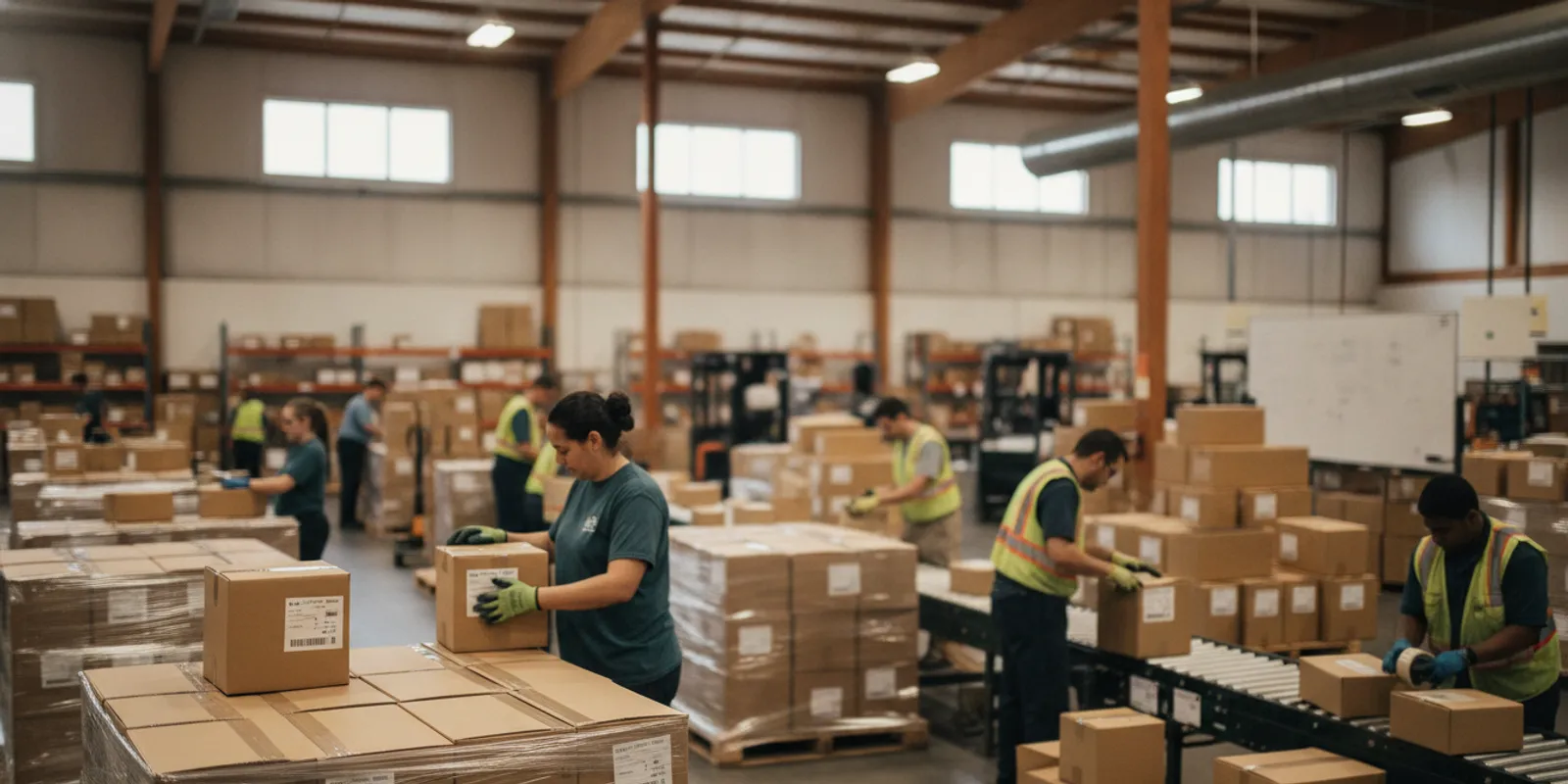
What does packaging for omnichannel retail need to do?
Omnichannel retail connects sales and replenishment across physical stores and e-commerce. Packaging for those channels may share some components, but it does not have to mean one identical box for every order. A primary product package might remain consistent while the case pack or shipping carton changes according to destination.
Each package has several jobs: protect the product, support efficient handling, communicate the necessary information, and present the item appropriately when it is opened or displayed. The balance changes along the route. A store case may be opened by a receiver or associate. A parcel may pass through more handling points and arrive directly at the person who ordered it. A retail distribution carton must serve the retailer’s receiving and replenishment process.
These choices are connected. Packaging dimensions influence storage and handling; opening style affects replenishment; and pack-out instructions affect the work at a fulfillment station. PMMI’s overview of omnichannel retail identifies packaging durability and channel strategies among the areas retailers are considering. In practice, it is useful to involve packaging, fulfillment, and retail operations teams before settling on a format.
A practical starting point is to define the unit that each person handles. The manufacturer may handle a bundle, the distribution center a case, the store an inner pack, and the consumer an individual product. Those units can be different without creating an unmanageable system. The important point is to document where the unit changes and what protects or identifies it at each step.
How do store shelves and parcel shipments differ?
Start with the destination and the people who handle the package. A store-bound case often needs to move from receiving to storage and then onto a shelf or display. A direct parcel needs to protect an individual order through shipping and provide a clear opening experience. The same product can therefore need different outer packaging even when its primary package is unchanged.
| Route or use | Main priorities | Questions to resolve |
|---|---|---|
| Store shelf and replenishment | Stable case, practical opening, simple stocking, clear identification | Who opens the case, and how does product move to the shelf? |
| Retail distribution center | Protection, consistent case configuration, routing information | What current receiving and case requirements apply? |
| Direct parcel shipment | Product protection, suitable outer carton, secure closure | What packing steps and handling occur before delivery? |
| E-commerce unboxing | Order presentation, accessible contents, sensible arrangement | What should the recipient see and remove first? |
Use this as a planning comparison, not a substitute for a retailer’s current specifications or package evaluation. One account may use a different case count, label placement, or receiving procedure than another. Confirm requirements for each route and review a representative packed product before standardizing the design.
The distinction also affects how a team evaluates a problem. A crushed corner in a distribution shipment may point to a stacking or pallet pattern issue. A product that arrives intact but is difficult to remove from a parcel may indicate a presentation or pack-out problem. A case that protects every unit but takes too long to open may create work during store replenishment. Describe the failure in terms of the route and the task, not simply as a request for a stronger box.
How should teams plan retail shelf packaging?
Work backward from the selling floor. Find out whether staff place individual products on the shelf, keep the case intact as a shelf display, or transfer items into a separate fixture. Then document how the package travels from the receiving area to that point. This prevents a case from being designed around an assumed workflow rather than the real one.
- Confirm the receiving unit. Record the number of products per case and how retailer orders are grouped. If quantities differ by account, note which configuration applies to each.
- Review case handling. Establish how cartons are lifted, stacked, opened, and moved. Note whether opening must be quick or whether the full case remains intact.
- Match protection to the product. Consider shape, weight, exposed edges, fragility, and the pressure or movement expected during transport and storage.
- Plan identification. Coordinate product and routing information with the retailer’s current instructions. Avoid relying on assumptions from an older order or another account.
- Check replenishment. Ask whether a store associate can move products from the case to the shelf without unnecessary unpacking, damage, or extra steps.
For example, a durable product sold in a multipack may need a case that is easy to identify and open at receiving. A delicate item might need more internal separation so products do not rub or shift while stacked. In both cases, the packaging team should review the actual product and the route it will take, not just the outside dimensions.
Consider the case after it is opened. Does the remaining carton stay stable while units are removed? Can a partially used case be moved without products falling out? If the case is intended to function as a display, does its opening preserve the product arrangement? These questions are easy to miss when review stops at the closed-carton stage.
Retail specifications vary. Share current written requirements with the packaging supplier and update the design when the item, case count, or destination changes. Volk’s custom corrugated boxes and supplies page describes packaging options for businesses seeking a solution suited to their products and use.
What changes when an order ships as a parcel?
A parcel package must protect the product outside the more predictable setting of a store delivery. The carton may be sorted, conveyed, stacked, and handled before reaching its recipient. Product fragility, weight, shape, and the packing method all influence the design. A package that works well as a case of units may not be suitable for a single-item shipment.
Begin with the current product and pack-out. Identify exposed corners, parts that can shift, surfaces that may scratch, and any components that need to remain together. Then look at the space between the product and outer carton. Too little protection can leave vulnerable areas exposed; too much room can let the item move and can make the package harder to handle. Review carton construction, inserts, and packing steps as one system.
Where a fitted cushion is needed, protective foam packaging may be considered alongside corrugated packaging. The right choice depends on the item and its handling needs. Test with a representative product and pack-out rather than choosing a material based only on appearance.
Also examine the closure and opening sequence. A secure closure should suit the package and shipping process, while the recipient should be able to access the contents without damaging them. For orders with several products, check that the arrangement limits movement and makes it clear what belongs in the order. If packing staff must follow a particular sequence, show that sequence in a concise instruction.
A useful parcel review follows the order from the packing bench to the recipient. At the bench, workers should be able to identify the right carton and protective components without searching through several similar options. During transit, the product should stay oriented as intended as far as the package design can reasonably support. At opening, the recipient should not need to cut through a surface that sits directly against the product. Each stage reveals a different requirement.
How can one packaging system serve multiple channels?
Some products can use a shared primary package while the outer carton changes by destination. Others need distinct formats because shelf replenishment and individual parcel shipment have different requirements. The goal is not to force every channel into one design. It is to find sensible common components while retaining the features each route needs.
- List destinations. Separate store replenishment, retailer distribution, direct-to-consumer parcels, and business-to-business orders. Do not treat all shipments as one channel if the handling differs.
- Map handoffs. Note who receives, stores, opens, repacks, and ships the product at every stage.
- Separate primary and outer packaging. Decide what can stay constant and what needs to change between a case shipment and an individual order.
- Compare pack-outs. Review quantities, protective components, assembly steps, presentation, and any channel-specific directions.
- Test a real workflow. Ask the people who will pack or replenish the item to handle a sample using ordinary work steps.
- Document the final choice. Record which package goes with each destination and how teams should identify, replenish, and reorder it.
Consider a business that sends the same item to retail partners and online customers. The item’s primary package may serve both. Retail cases can then be configured for retailer quantities, while individual online orders use an outer carton and protective arrangement suited to parcel shipping. If an online order combines several products, the pack-out may need another variation to prevent movement and keep the order organized.
Conversely, a single common outer carton can be a poor fit if it forces store staff to unpack unnecessary material or leaves parcel shipments underprotected. A side-by-side review of the actual routes makes these trade-offs visible. It also helps teams decide whether separate packaging instructions or formats are warranted, rather than adding complexity without a clear operational reason.
One way to control complexity is to standardize the decisions that do not need to change. A team might use a consistent primary package, a small set of outer carton sizes, and clearly named pack-out instructions for each channel. Standardization should follow the route review, not replace it. Fewer formats are useful only when each selected format performs its job.
What should e-commerce teams consider about presentation?
Online customers do not see a product on a store shelf before they order. The delivered package becomes the first physical interaction with the order, so it should protect the contents and make them accessible. A thoughtful presentation does not require a complicated opening or extra steps that slow down packing.
Review the experience from the recipient’s point of view. Can the package be opened without damaging the product? Are multiple items arranged so they do not collide? Is the protective material appropriate and easy to remove? If the order needs a branded or giftable presentation, coordinate print and design decisions with the protective function and the way the package will be packed.
Presentation also includes the condition of the package at arrival. A visually appealing design is less effective if the carton is oversized, poorly supported, or prone to visible damage. Look at the outside, the opening, the product arrangement, and the materials left after unpacking. A short review with someone who did not pack the sample can reveal confusing steps that the regular team no longer notices.
Printing method and design also affect the practical choices available. Digital and flexographic printing offer different production approaches; the appropriate one depends on the project’s design and production needs. Volk Packaging offers a packaging prototype process so teams can review a sample and specifications before production. Evaluate the package with the product inside, rather than approving it only from a drawing.
How do packaging and fulfillment workflows connect?
Packaging decisions shape picking, packing, shipping, storage, and replenishment. A team handling both retail cases and individual consumer orders may need different materials and instructions at the packing station. If a box or insert changes, the people doing the work need updated directions as well.
For each order type, document the package format, protective materials, item arrangement, closure, and any retailer-specific instructions. Include a simple visual example if a sequence is easy to misunderstand. Keep the instructions where the work happens and identify who updates them when product or channel requirements change.
For example, a retail order may be packed by case quantity and require a specific case configuration, while a consumer order may be picked as individual units and packed with protective components. If the same SKU appears in both workflows, labels or system instructions should help staff select the correct pack-out. A trial run can reveal whether the instruction is clear and whether needed materials are readily available.
Volk Sanford provides fulfillment services including picking, packing, shipping, kitting, labeling, inventory management, warehousing, and contract packaging. Businesses assessing outsourced operations can review Volk Sanford fulfillment services and this 3PL versus in-house fulfillment decision guide when comparing operational needs.
Packaging and fulfillment teams should also agree on ownership. The packaging specification may sit with a design or procurement team, while pack-out instructions sit with operations. If no one owns the connection, an approved box can reach the work area without the right insert, label, or replenishment instruction. A short change-control record can identify the approved format, effective date, affected channels, and person responsible for updates.
How should teams compare packaging options?
Comparing options by carton price alone can hide the work created elsewhere. A smaller change in packaging may affect packing time, storage space, product damage, presentation, or the number of formats a team must keep available. A useful comparison looks at the full operating choice.
- Protection: Does the option address the product’s vulnerable areas and the handling expected on its route?
- Labor: How many steps are required to assemble, insert, close, label, and reopen the package?
- Storage: Can materials be stored and replenished near the work area without confusion?
- Channel fit: Does the option work for the intended store, distribution, parcel, and unboxing uses?
- Presentation: Does the package support the way the product should appear when received or stocked?
- Change management: Can the team clearly distinguish this format from similar formats?
For a simple example, a shared carton may reduce the number of materials in storage but require added inserts for parcel orders. Separate cartons may add another item to inventory while reducing assembly steps and improving fit. Neither choice is automatically correct. The team should compare the complete workflow with representative orders and record why the selected option fits the routes.
How should teams test a packaging decision?
A useful review uses representative products, realistic pack quantities, and the steps staff will actually follow. A sample should not just show that a carton closes. It should help the team check fit, protection, assembly, access, and destination-specific handling together.
- Prepare the sample. Use the actual product, inserts, and any primary package. If products vary in size, include the variants most likely to challenge the fit.
- Pack it as normal. Have a team member follow the proposed instructions and record any unclear step, extra handling, or difficulty closing the package.
- Inspect key contact points. Look for exposed edges, excess movement, pressure on vulnerable surfaces, or parts that can collide.
- Review opening and replenishment. Ask a recipient or store associate to follow the intended opening sequence and note whether the package serves that use.
- Compare routes. Repeat the review for retail case and parcel configurations. A successful sample for one destination does not automatically validate another.
- Capture changes. Record the revised dimensions, components, pack-out instructions, and approval owner so production and fulfillment teams share the same specification.
Testing need not become a complex project to be useful. A short, documented walkthrough can identify a confusing opening, a missing insert, or an instruction that is easy to misread. When a concern requires more formal evaluation, define the test with the packaging supplier and the relevant channel partner before drawing conclusions.
Use a simple review record for each route. Note the product version, case or order quantity, carton and protective materials, people who performed the trial, observations, and changes requested. If the product or route changes later, the record gives the team a baseline for deciding whether the package needs another review.
What sustainability questions belong in the review?
Protection and practical performance come first, but material choices can also support a company’s sustainability goals. Ask whether the package uses only the components needed for the route, whether materials can be separated for the intended recycling stream, and whether the design avoids a protective feature that creates more waste without solving a real problem.
Volk Packaging’s sustainability approach includes corrugated recycling, water-based inks, and FSC- and SFI-certified packaging. The company also offers Supershield wax-free boxes, described as FDA- and CFIA-approved when that application is relevant. Teams can review the Volk Packaging sustainability information alongside their own material and handling requirements.
Do not treat sustainability as a separate review performed after the package is complete. A right-sized carton, a reusable component where appropriate, or a design that avoids unnecessary material can affect storage and packing as well as waste. Discuss these goals early, then confirm that the proposed solution still protects the product and supports the channel workflow.
What information helps a packaging review?
Bring practical details to the first conversation. A reviewer needs to understand what the product is, where it travels, how it is packed, and what prompted the review. Clear information can make it easier to compare possible structures or pack-outs against real use rather than assumptions.
- Product dimensions, weight, and any fragile or exposed areas.
- Samples of current primary and outer packaging, including inserts and protective materials.
- Each destination and route, including who handles the product at each handoff.
- Case counts, order configurations, and current retailer instructions where applicable.
- How the package is opened, stocked, picked, packed, shipped, and replenished.
- Print, presentation, and sustainability considerations relevant to the project.
- A representative sample order or pack-out for practical evaluation.
It also helps to describe the problem in concrete terms. Is the goal to protect an exposed product edge, simplify stocking, support a new parcel route, or make an order easier to pack? A focused objective gives the team a way to judge proposed changes. Avoid changing several parts at once if it will make it difficult to tell which change addressed the concern.
Packaging is quote-based because specifications, quantities, and service needs differ. Volk Packaging is a third-generation, family-owned corrugated packaging manufacturer and distributor serving New England since 1967. Volk Sanford provides complementary fulfillment and contract-packaging services. To discuss a packaging project, use the Volk Packaging request form and include the details available about the product and its routes.
Frequently asked questions
Does omnichannel retail require separate packaging for every channel?
No. A product may retain the same primary package while the outer carton changes for retail cases or individual parcels. Map the handoffs and requirements first, then decide which components can be shared without compromising protection or handling.
Should e-commerce orders use the same carton as store shipments?
Not necessarily. A store case may be sized for replenishment quantities, while a parcel carton needs to protect an individual order and suit its shipping route. Compare the actual pack-outs and test each intended use.
What should a business provide when requesting packaging guidance?
Share product dimensions and weight, current packaging, destinations, order quantities, handling steps, retailer instructions, and any concerns about protection or presentation. Samples are helpful when the team needs to assess a proposed pack-out in practice.
Can a fulfillment partner help with packaging workflows?
A provider may support picking, packing, shipping, kitting, labeling, and contract packaging, depending on the services offered. Confirm the provider’s capabilities and share clear instructions for each channel and order type.
Contact us to discuss your fulfillment requirements.
When retail, parcel, and replenishment needs are reviewed together, teams can choose packaging that protects products and fits the work from receiving through delivery.