
.
For an ecommerce brand, the package is often the first physical conversation a customer has with your business. Ecommerce unboxing experience packaging should protect the product, make opening intuitive, and present the order with the same care your team puts into making or selecting it. That requires more than choosing a box size: structure, print, inserts, and pack-out handling need to work together.
Request A Quote for packaging guidance based on your products, shipping conditions, and presentation goals.
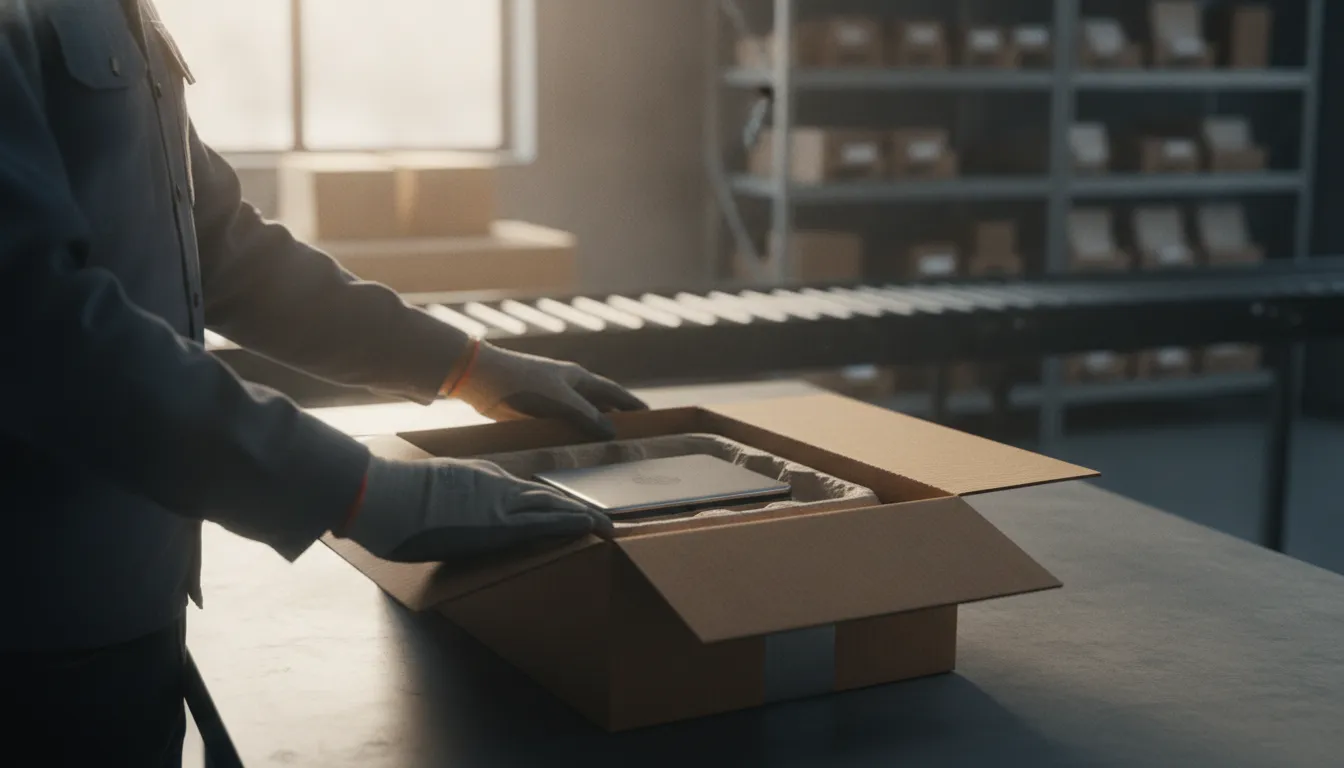
Ecommerce unboxing experience packaging combines box design, protective components, graphics, and fulfillment practices to create a secure, consistent, and professional opening experience.
The strongest approach starts with the customer’s first impression, then works backward to the physical decisions that shape it. Box construction is the foundation: it influences how the product arrives, how easily the package opens, and what the customer notices first.
How Ecommerce Unboxing Experience Packaging Shapes the Customer’s First Impression
An unboxing experience is the sequence a customer moves through from receiving a package to seeing, handling, and removing the product inside. Ecommerce unboxing experience packaging therefore includes more than a printed logo on a shipping carton. It brings together the box structure, product protection, opening method, visual presentation, and any inserts or finishing details that shape that first physical interaction.
The starting point is still practical: the package must protect its contents through distribution. A peer-reviewed study on corrugated board notes that box design involves dimensions, features, visual appearance, and material properties. The box’s primary purpose is protecting the contents from distribution-chain hazards. Read the research on corrugated box design and parcel conditions for that broader engineering context.
From there, the experience is shaped by decisions such as:
- Whether the box fits the product securely and opens without unnecessary struggle.
- What the customer sees first, including exterior printing, interior surfaces, protective materials, and product placement.
- How clearly the packaging communicates care, organization, and the brand’s visual identity.
- Whether the same opening sequence can be packed consistently across orders.
That last point distinguishes unboxing design from a purely visual exercise. A thoughtfully presented package still has to work for the people selecting, packing, and shipping it. Box dimensions, materials, inserts, and opening features should support both the customer’s interaction and the operational process behind it. Volk Packaging helps New England businesses evaluate custom corrugated box options with product protection, fit, presentation, and handling in mind.
This article focuses on the physical package and the choices that create a coherent reveal. It is not a replacement for an end-to-end guide to warehousing, order routing, or shipping operations. Those considerations belong to the broader ecommerce fulfillment process. The two areas connect, but separating them makes it easier to improve the box itself without losing sight of the work required to deliver it consistently.
Choose Box Structure for Protection and Presentation
A box has to do more than fit the product. Its dimensions, board construction, opening details, and printed surface should work together through packing, transport, delivery, and the first reveal. Corrugated boxes can encounter crushing and puncturing in ecommerce shipments, so protection should be designed around the actual product and distribution conditions rather than selected from appearance alone. Research on corrugated parcel packaging also notes that material properties can be tailored to help limit puncture and general damage: review the parcel packaging study.
| Design choice | Buyer question | Unboxing effect |
|---|---|---|
| Dimensions and fit | What does the product need around it for protection, closure, and handling? | A stable pack-out can feel intentional instead of loose, overfilled, or difficult to open. |
| Board and material properties | What loads, edges, moisture exposure, and puncture risks are likely? | The box arrives in better condition and presents the product with greater confidence. |
| Opening style | Can the recipient open it easily without compromising the box during transit? | A considered opening sequence makes access straightforward while preserving presentation. |
| Testing and pack-out review | How will the design respond to the real distribution chain? | Fewer surprises between the approved sample and the delivered package. |
Match the structure to the distribution chain
Transport conditions matter. One academic review explains that packaging requirements depend strongly on exposure conditions and can differ for ocean freight, local domestic delivery, and long-distance heavy-truck transport. Loads are also dynamic, not simply a constant weight placed on a box. That makes the product’s route, handling points, stacking environment, and seasonal exposure useful inputs for design decisions. See the review of corrugated packaging and transport loads for context.
Opening features deserve the same discipline. A tear strip or perforation may improve access, but its size, position, and pattern can affect box strength. Ask whether the opening supports the intended reveal without crossing a vulnerable edge or weakening a load-bearing panel. A practical review should include a filled sample, the intended closure method, and the hand movements a recipient will use. Volk’s custom corrugated box options can be evaluated around those product, route, and presentation requirements.
Use Graphics, Printing, and Opening Details to Guide the Reveal
Printing and opening mechanics should work together. Exterior graphics can establish recognition before the box is opened, while interior printing can create a deliberate next step once the customer lifts the lid. The goal is not to decorate every surface. It is to give the package a clear visual hierarchy: identify the brand, orient the recipient, and make the product feel intentionally presented.
Start by deciding what the recipient should notice first. A restrained exterior may be appropriate when the package moves through a shared workplace or needs to protect product discretion. Interior graphics can then carry the more expressive brand experience. Color, graphics, logo, typography, and layout are distinct visual elements that can be evaluated together rather than treated as one design choice. A 2025 study of packaging visuals examined these elements in relation to brand experience and purchase intention. Offering useful context for teams planning presentation details, though its consumer-product setting should not be treated as a guarantee for every ecommerce business (peer-reviewed packaging research).
Perforations can make a carton easier to open, convert a shipping box into a display, or create a clean reveal around a product. They also change the structure. Research on perforated packaging found that load-bearing capacity varied by perforation pattern, with reductions in the tested designs ranging from 14% to 43%. The same study found that the placement and extent of the perforation mattered. Treat those results as a design warning, not a universal performance prediction: a tear strip, opening panel. Or perforated wall should be reviewed against the board, box dimensions, product weight, and distribution conditions (research on perforated packaging design).
Easy opening also requires practical restraint. A tab that is obvious and accessible can reduce frustration, but an opening feature that weakens a corner. Interrupts a printed message, or leaves an untidy edge may undermine the presentation. Review the full sequence from sealed carton to exposed product, including where hands naturally grip and whether the recipient needs a tool. Volk Packaging can help evaluate custom printed corrugated packaging alongside the structural and production requirements, so graphics, printing, and opening details support the same unboxing objective.
Add Inserts and Protective Components Without Clutter
Inserts should make the opening sequence easier to understand while keeping the product secure and accessible. Start with the product’s actual needs: does it need separation, edge protection, cushioning, moisture resistance, or a stable position inside the carton? A die-cut corrugated insert, foam component, folded divider, or molded support may be more useful than several decorative additions.
Think of the package as a sequence. The customer should be able to open the box, identify the product, and remove it without digging through loose material or disturbing items that should remain together. Place the most important component where it performs a clear job. A separator can keep multiple products from contacting one another. A top pad can protect a finished surface. A fitted support can prevent movement during handling. The right choice depends on the product dimensions, fragility, and distribution conditions.
Choose components that support the product
Common package components include tissue paper, filler, stickers, tape, promotional cards, gifts, and samples. Shopify uses these categories to illustrate the range of elements a brand might consider, but a list is not a performance specification. Select each item for a defined purpose rather than adding components because they appear in another brand’s package. Tissue may create a clean separation layer, while filler may occupy space around a product that could shift. Neither should replace a properly engineered protective component.
Cards can provide care instructions, usage guidance, a reorder path, or a concise thank-you message. Samples should fit the product and audience, arrive protected, and remain optional when they complicate the pack-out. Keep loose materials controlled so they do not obscure the product or create unnecessary cleanup. If the package includes several items, use placement and sequencing to show what belongs together.
Connect presentation with shipping requirements
Protective components still need to work through storage, picking, packing, and transit. Review the complete pack-out with the team that will handle it, not only the designer. Volk Packaging provides shipping packaging supply options for businesses evaluating protective materials and packing requirements. A practical review can confirm that inserts fit consistently, cards stay visible, and the finished package closes securely without excess material or awkward handling.
Right-Size Packaging for Product Fit, Handling, and Waste
Right-sizing is not simply choosing the smallest box that can hold a product. It is a coordinated decision about fit, cushioning, material selection, handling, and the way a package opens. A well-chosen format should hold the product securely, leave room for necessary protective components, and support a repeatable pack-out without creating avoidable empty space.
Start with the product itself. Record its dimensions, weight, shape, fragile areas, and any components that ship with it. Then consider the actual distribution path. Parcel boxes experience different loading conditions and events across different distribution chains. So a package designed for local delivery may not be appropriate for long-distance trucking or ocean transport. Research on transport packaging notes that specifications vary by shipping environment and that transport loads are often dynamic rather than static. Review the transport packaging research when your products face demanding or variable handling conditions.
Fit also includes the space required for protection. Fragile goods may need foam, pads, partitions, or other components to prevent movement and absorb contact. A tight fit that leaves no room for protection can be as problematic as a box with excessive void space. Material selection should reflect the product and the distribution chain rather than follow a one-size-fits-all rule. A recent corrugated packaging study describes each parcel distribution chain as unique and discusses how material properties can be tailored to reduce puncture and general damage during distribution.
Waste considerations belong in the same conversation, but avoid treating material reduction as the only objective. E-commerce packaging is expected to be durable while remaining lightweight, and the right balance depends on the product, shipment, and handling environment. Review available ecommerce fulfillment process guidance for the broader operational context, then keep the packaging decision focused on the unboxing experience.
Finally, test the pack-out with the people who will perform it. Document product orientation, protective components, closure method, and acceptable movement inside the box. That gives your team a consistent standard to follow and makes it easier to identify when a design needs adjustment before it reaches customers.
Make Fulfillment Handling Part of the Unboxing Experience
A carefully designed box can still create an inconsistent customer experience if the fulfillment process treats every order as an afterthought. The handoff between packaging design and fulfillment execution matters: the right materials, inserts, labels, and pack-out sequence need to work together on an actual order line.
Volk Sanford supports picking, packing, and shipping for B2B and B2C orders. That makes it possible to define how a product is selected from inventory, protected in its box, presented when opened, and prepared for its final carrier handoff. The goal is not to add unnecessary steps. It is to make the intended opening sequence repeatable.
Connect the pack-out sequence to the customer experience
Picking and inventory management affect which components are available when an order is assembled. Packing determines the position of the product, cushioning, paperwork, and any approved insert. Kitting can combine several items into one planned set, while labeling helps identify the correct contents and handling requirements. These operational details support the same presentation decisions made during packaging design.
Fulfillment teams can also document practical standards, such as which box belongs to a product combination, where an insert sits, and how a finished package is sealed. Those standards help distinguish an intentional opening experience from a box that was simply filled with whatever materials were nearby. Contract packaging and repackaging may be useful when a product needs a defined assembly or presentation process.
Use integrations to reduce avoidable variation
For brands managing orders across multiple channels, connected workflows can help align order information with fulfillment instructions. Volk Sanford supports integrations with Shopify, WooCommerce, and Amazon. The specific setup should reflect the products, order types, and packaging rules involved, rather than assuming every channel uses the same pack-out.
This is where fulfillment execution remains distinct from packaging design. Design determines the box structure, graphics, opening features, and components. Fulfillment puts those decisions into practice through Volk Sanford services, including warehousing, inventory management, kitting, labeling, and shipping. Reviewing both sides together gives an ecommerce team a more practical way to create a consistent unboxing experience.
A Practical Workflow for Building Ecommerce Unboxing Packaging
A disciplined workflow keeps the package aligned with the product, the customer, and the way orders move through fulfillment. Use these six steps to move from a broad unboxing idea to a repeatable pack-out that can be reviewed and refined.
- Define the audience and product. Identify who receives the order, what they should understand when the box opens, and which product details need protection or explanation. Record dimensions, weight, orientation, components, and any presentation requirements. A B2B shipment may need a different opening sequence than a direct-to-consumer order, even when the product is similar.
- Document hazards and the route. Map the package journey from the packing station to the delivery point. Note stacking, vibration, puncture, moisture, temperature, handoffs, and the likely shipping method. Distribution conditions vary, so do not assume a package will experience one predictable load. The route should inform material and structural decisions.
- Choose the box structure. Set the internal dimensions, board specification, closure, opening style, and protective components around the product and route. Consider how the box will be handled by both warehouse staff and the recipient. If a custom corrugated format is appropriate, compare options with a packaging professional rather than selecting a style from appearance alone.
- Plan graphics and inserts. Decide what belongs on the exterior, inside the lid, or beside the product. Keep instructions, brand details, care information, and promotional material easy to find. Select tissue, filler, foam, cards, or samples only when each item has a clear purpose and will not obstruct safe removal or create unnecessary handling steps.
- Test a filled pack-out. Build a representative package using the actual product, inserts, closure, labels, and packing sequence. Check fit, movement, opening effort, presentation, and the time required to assemble it. Review the pack-out after practical handling or appropriate testing, then adjust the structure or materials where the evidence calls for a change.
- Standardize fulfillment and review. Document the packing sequence, component locations, labeling rules, and quality checks. Train the team and monitor exceptions such as damaged components, missing inserts, or inconsistent presentation. If fulfillment is outsourced, align the packaging specification with picking, packing, kitting, inventory, and shipping procedures, then review the workflow as products or order volumes change.
Ready to discuss a packaging format for your products? Request A Quote and share your product, shipping, and pack-out requirements for a quote-based recommendation.
Frequently Asked Questions
What makes packaging feel intentional during an ecommerce unboxing?
Start with a box that fits the product and protects it through handling, then plan the opening sequence. Clear graphics, a logical presentation order, a useful insert, and a clean pack-out can make the experience feel deliberate without adding unnecessary components. The best choices support both the customer-facing reveal and the team packing each shipment.
How do I choose inserts for a professional unboxing experience?
Choose inserts based on the job they need to perform. A molded or corrugated component may hold a product in place, while tissue, filler, an instruction card, or a sample may support presentation or education. Keep the contents easy to identify and remove, and test the complete package so the insert does not create extra movement, clutter, or packing steps.
Can easy-open features weaken a shipping box?
They can if the opening is added without considering the box structure. Opening size, position, and perforation pattern affect packaging strength, so an easy-open feature should be reviewed alongside the board grade, product weight, and distribution conditions. A packaging professional can help balance a smooth opening with the protection required in transit. Research on corrugated packaging design documents this relationship.
How can fulfillment teams deliver the same unboxing experience every time?
Document the pack-out sequence, packaging components, product orientation, insert placement, sealing method, and labeling requirements. Then train or brief the people handling the order and review exceptions such as bundles, gift orders, or multiple product sizes. When picking, packing, kitting, inventory, and shipping instructions are coordinated, the intended presentation is easier to reproduce at scale.
Ready to Plan a More Professional Unboxing Experience?
The right combination of box structure, graphics, inserts, and fulfillment handling can help your team create a thoughtful experience that fits your products and operating needs. Request A Quote to discuss custom ecommerce packaging design, printed corrugated boxes, inserts, and coordinated fulfillment requirements with Volk Packaging.