
Choosing packaging materials is rarely a matter of finding the strongest option. A package also has to fit the product, withstand its distribution environment, support efficient packing, present the brand well, and meet sustainability expectations.
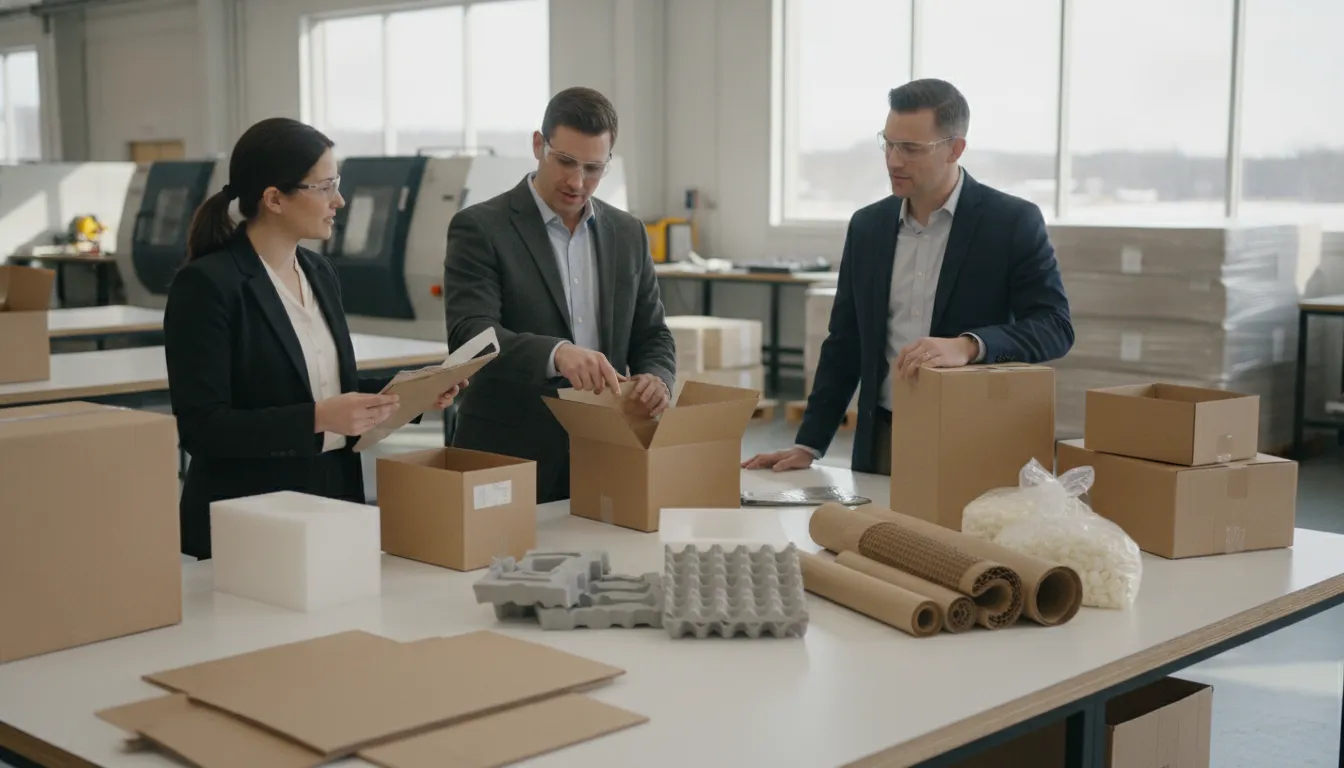
A packaging material selection matrix gives buyers a practical way to compare those requirements in one place. By scoring corrugated structures, protective components, printing, handling conditions, and end-of-life considerations against the same criteria, teams can identify tradeoffs before they commit to a specification.
This approach is especially useful for New England manufacturers, distributors, and fulfillment teams managing different products or shipping routes. It turns a broad material discussion into a documented decision that can be reviewed with a packaging partner. Start by defining what the matrix should measure and how each factor affects the finished package.
What Is a Packaging Material Selection Matrix?
A packaging material selection matrix is a structured way to compare packaging options against the requirements of a specific product, shipment, and customer experience. Instead of asking which material is best in the abstract, the matrix asks which combination of materials and features best fits the job.
Think of it as a decision aid, not a universal scorecard and not a Volk rating system. A manufacturer might use one matrix for a fragile component shipped through parcel networks and another for a product that needs warehouse storage. Retail presentation, or protection from moisture. The right choice depends on intended use, target market, operating conditions, and the priorities that matter most for that application. The University of Florida similarly notes that packaging format should reflect intended use, qualitative needs, and material considerations.
How the rows and columns work
The rows usually represent the options being considered. Depending on the project, a row might describe a packaging concept, a box configuration, or a complete pack-out that combines an outer structure with interior protection. The columns represent the criteria used to compare those options. Common columns include product protection, handling and storage, pack-out efficiency, communication, sustainability, and practical production requirements.
This structure makes tradeoffs visible. One option may offer strong product protection but add unnecessary material or slow the packing process. Another may support efficient handling and presentation but require testing under the actual distribution conditions. A useful matrix records those differences so the team can discuss them with a shared set of requirements rather than relying on preference or trial and error.
Three functions and three dimensions
A helpful starting framework groups packaging functions into protection, utility, and communication. Protection covers the job of keeping the product intact. Utility includes use, handling, storage, opening, closing, and pack-out needs. Communication covers information and presentation. These functions are commonly paired with three broader dimensions: physical, ecospheric, and human characteristics.
In practice, that means reviewing more than strength or appearance. Physical questions may involve fit, movement, and distribution hazards. Ecospheric questions may involve material efficiency and end-of-life considerations. Human questions may involve how workers pack the product and how customers receive or use it. The matrix helps connect these considerations without pretending that one metric can capture every packaging requirement.
For a related starting point, review these packaging design requirements before building the comparison. The matrix should clarify the decision, then support a specification that can be reviewed with a packaging partner.
Which Criteria Should You Compare First?
A useful matrix starts with the product and its working environment, not with a material name. The target market and intended use should influence the weighting: a delicate component shipped through several handling points may prioritize movement control and distribution protection. While a retail-ready product may give more weight to presentation and opening experience. Local operating conditions matter too. Moisture, handling, unitization, transport, and time can all affect corrugated packaging during distribution. So a material that performs well in one setting should not be treated as a universal answer.
Use the table below to create a practical first pass. Add a simple rating or notes column for your own requirements, but do not treat the result as a universal score. EPA guidance also recommends considering both production and disposal impacts when making packaging decisions, while efficient construction can reduce waste. Review the EPA guidance on sustainable packaging alongside your product and operations data.
| Criterion | What to examine | Why the weighting can change |
|---|---|---|
| Product dimensions and fragility | Record product size, weight, shape, and vulnerable areas. Note movement tolerance and how the item must be positioned. | Irregular or delicate products may need a closer fit or additional protective components. Standard products may have more stock-format options. |
| Protection | Consider impact, vibration, compression, abrasion, moisture exposure, and the consequences of damage. | Distribution hazards and product value should determine how much protection deserves priority. Packaging should be evaluated against the actual route, not only a controlled workspace. |
| Handling and distribution | Map warehouse storage, unitization, loading, transport, parcel or freight handling, and expected time in the channel. | Longer storage, repeated handling, variable weather, or moisture can shift the preferred balance between material efficiency and resilience. |
| Workflow | Check how packaging will be erected, packed, closed, labeled, stored, replenished, and processed by equipment or fulfillment teams. | A material or format that protects the product but slows packout may not suit a high-throughput operation. Include labor and process requirements in the comparison. |
| Presentation | Compare the desired size, shape, configuration, print, graphics, and unboxing or receiving experience. | Retail, direct-to-customer, and industrial shipments can have different communication needs. Presentation should support the buyer’s market without compromising protection. |
| Sustainability | Review material efficiency, right-sizing, production impacts, disposal, recycling access, and any relevant certifications or ink choices. | Local recycling programs can differ. EPA advises flattening boxes before recycling, but acceptance rules should be confirmed with the local program. |
The University of Florida similarly frames packaging format around target market, intended use, qualitative needs, and material considerations. That is why the strongest matrix is usually completed with the packaging producer and the people who handle the product. Start with the criteria that carry the greatest operational or damage risk. Then confirm that the proposed structure, protective components, and workflow can be measured and tested for the application.
How Do Corrugated Structures and Protective Components Work Together?
Think of the package as a coordinated system rather than a box with filler added afterward. The outer corrugated structure provides the package format and a surface for closure, handling, and presentation. Internal components then help position the product, limit unwanted movement, and separate vulnerable areas from contact with the box. In a packaging material selection matrix, these choices belong in related rows because changing one can affect the requirements for the other.
Corrugated boxes are a paper and paperboard packaging format, according to the U.S. Environmental Protection Agency. The appropriate structure depends on the product, dimensions, distribution environment, and operating process. Avoid selecting a board construction from a single number or a generic rule. A corrugated box may encounter moisture, handling, unitization, transport, and time while it moves through distribution. So the matrix should record the conditions that matter for the actual shipment.
Internal cushioning or fitted components address a different part of the problem. Foam, inserts, dividers, pads, and similar elements can help hold a product in position and create separation around sensitive surfaces. They can also shape how the package opens and how the product is presented to the recipient. Volk Packaging explains that foam can be designed into a box to help a product arrive intact and professionally presented. Explore the available protective foam packaging options when cushioning, fit, or presentation is a key matrix criterion.
Fit matters as much as material choice
A large amount of empty space can allow movement, while an overly tight fit can make packing difficult or place unwanted pressure on the product. Record product dimensions, orientation, contact points, access needs, and pack-out steps before selecting the internal component. Then consider how the completed package will be closed, handled, stored, and opened. This is also where custom corrugated boxes may be useful when stock dimensions cannot provide a practical fit.
Validation should cover the complete package, not just the outer box. ISTA recommends understanding how products move through their distribution channels and testing packages rather than relying only on trial and error. Its documentation guidance calls for a specific description of the package. Including the packaging type and material, corrugated board composition, cushioning details, closure method, and unitization method where applicable. Keep drawings, photographs, and specifications for both exterior and interior components with the package record. If the corrugated board grade changes, ISTA says the package requires retesting. That change-control discipline keeps the matrix connected to the package that is actually being shipped.
How Should Handling Conditions Change the Matrix?
A packaging material selection matrix should reflect the route a package actually takes, not just the product sitting inside it. Corrugated boxes can be affected by moisture, handling, unitization, transport, and time during distribution. So a material that looks suitable in a controlled packing area may need a different evaluation once warehouse storage, pallet movement, parcel shipping, or fulfillment steps are added.
Start by recording the conditions that matter for the specific operation:
- Moisture: Note whether the package may encounter rain, condensation, washdown areas, temperature changes, or other exposure. If moisture is a meaningful risk, discuss appropriate material or barrier options rather than assuming a standard construction will fit.
- Time and storage: Define how long packaged goods may remain in a warehouse, including whether boxes must be stacked or repeatedly moved before shipment. Warehouse dwell time can be part of the functional requirement, not an afterthought.
- Handling and unitization: Document how cartons are erected, closed, palletized, wrapped, picked, and transferred. Equipment requirements and unit-load methods can influence the material and package design.
- Transport and order path: Separate palletized B2B shipments from parcel orders. A package moving through a fulfillment operation, then being picked and shipped individually. May face a different sequence of handling than a carton sent as part of a stable pallet load.
These conditions should become measurable rows in the matrix. One metric cannot capture every box requirement, and a useful specification should be agreed between the purchaser and producer on both the metrics and the measurement methods. That creates a shared basis for comparing options instead of relying on a vague preference for heavier or lighter material.
Testing and change control are equally important. ISTA recommends understanding how products move through their distribution channels and testing packages rather than depending only on trial and error or field experience. Record the product, package construction, closure, cushioning, unitization method, and intended distribution path. If a board grade changes, retesting may be required; a material substitution should not be treated as a paperwork-only change.
When packing, storage, or shipping is handled by another team, include that workflow in the review. Volk Sanford provides fulfillment and contract packaging services that can help buyers consider packaging requirements alongside operational handling. The goal is not to promise one universal construction. It is to select and validate a material against the conditions the package must realistically meet.
How Do Printing and Presentation Affect Material Selection?
Packaging does more than contain a product. It can introduce your brand, guide handling, and shape what a customer notices when the package arrives. That means print and presentation belong in the same decision conversation as dimensions, protection, and production requirements.
Start by defining the role the package needs to play. A shipping carton for industrial components may need clear identification and durable graphics, while an e-commerce package may place greater emphasis on opening experience and consistent brand presentation. Product dimensions also matter. Size, shape, and configuration influence the available design, the amount of printable surface, and how efficiently the package uses material. Volk’s design team works with customers to understand requirements, branding guidelines, and product specifications before recommending an approach. Custom packaging design and printing can include custom sizes, shapes, configurations, full-color printing, logo placement, and custom graphics.
Match the print process to the production need
Printing method should be evaluated alongside run volume and expectations rather than selected in isolation. Volk may use flexographic or digital printing depending on volume, client needs, and expectations. In practical terms, the right choice can depend on how many packages you need, how the graphics should appear, and what the production schedule requires. Confirm those requirements during the design conversation instead of assuming that one process is best for every order.
Your packaging material selection matrix can therefore include presentation criteria such as branding requirements, graphic complexity, package configuration, expected volume, and timing. Score those criteria against the product and workflow, then review the result with your packaging supplier. This keeps visual goals connected to a package that is practical to produce, handle, and use.
How Can Sustainability Become a Scored Criterion?
Sustainability is more useful in a packaging material selection matrix when it is divided into observable criteria rather than treated as a general label. Score each option against the requirements of your product, distribution environment, and end-of-life process. A lighter package may reduce material use, but only if it still provides the protection and handling performance your operation needs. EPA guidance connects efficient packaging construction with reduced waste, while also emphasizing the importance of considering production and disposal impacts.
| Criterion | What to evaluate | Questions for the scorecard |
|---|---|---|
| Right-sizing and material efficiency | Dimensions, empty space, excess material, and the protection required for the product. | Can the package fit the product more closely without increasing damage risk? Volk notes that right-sized packaging can reduce excess material, empty space, and packaging waste. |
| End-of-life and recycling | Whether the material is accepted by the intended recycling program and how easily it can be prepared. | Can the box be flattened and kept free of items your local program excludes? Recycling rules vary by municipality, so confirm local requirements rather than assuming universal acceptance. EPA recommends flattening boxes before placing them in a recycling bin. |
| Coatings and wax-free options | Whether barriers or coatings create a functional need and affect recovery options. | Is a wax coating necessary for the application? Wax-saturated corrugated can be difficult to recycle. Volk describes Supershield as a wax-free alternative to wax-coated corrugated, but the appropriate choice remains application-specific. |
| Inks and certifications | Printing inputs and the certifications applicable to the specific packaging being considered. | Are water-based inks appropriate for the print requirements? Volk states that it uses water-based inks and offers corrugated packaging certified by SFI and FSC. Confirm the precise certification scope for the product and order. |
Use the score as a comparison aid, not as proof that one material is always more sustainable. A package that fails in transit can create replacement product, additional shipping, and avoidable waste. Likewise, a recyclable format may not be recovered if the local program does not accept it. Review the criteria with the packaging producer, document the assumptions behind each score, and revisit them when the product, route, or fulfillment process changes.
For more background, review Volk’s sustainable packaging options. Businesses evaluating outsourced packing and shipping can also explore sustainable packaging for fulfillment.
How Do You Turn the Matrix Into a Packaging Specification?
A scored matrix becomes useful when it can guide purchasing, design, production, and quality decisions. Convert the preferred option into a specification that another team member or supplier can understand without revisiting every discussion behind the scores. The specification should describe the product, the package, the operating conditions, the measures of success, and the process for approving changes.
- Identify the product and package. Record the product name or family, dimensions, weight, orientation, quantity per pack, and any handling or presentation requirements that affect the design. Identify the packaging format and its intended use. ISTA recommends identifying the packaged product and packaging tested in the documentation, rather than leaving the test sample ambiguous. Include a description of the exterior and interior package, such as the packaging type, material, corrugated board composition, cushioning details, closure method, and unitization method where applicable. See Volk’s packaging design requirements guide for a related planning reference.
- Describe materials and protective components. Translate the selected matrix criteria into plain specifications. Note the chosen corrugated structure, interior fit, cushioning or inserts, moisture considerations, and any material or finish requirements. Do not assume that a single strength or performance measure represents the whole package. The available evidence should support the selected materials and explain what they are intended to do.
- Agree on measurable criteria with the supplier. Define how the package will be evaluated, including the metric, measurement method, sample or package configuration, and acceptance decision. A technical specification should be quantifiable and agreed by both purchaser and producer on the metrics and measurement methods. This matters because material and distribution conditions vary, and no single metric captures every box requirement. If a requirement cannot be measured yet, identify who will resolve it before production.
- Prototype and validate the package. Build a representative sample and evaluate it in the context where it will be stored, handled, shipped, opened, and used. ISTA recommends understanding the distribution environment and testing packages instead of relying only on trial and error or field experience. Document the sample, conditions, observations, results, photographs, drawings, and any limitations. A test or recommendation applies only to the specific application it addresses, so avoid treating validation as a universal guarantee.
- Control changes after approval. Keep the approved specification, drawings, component details, and validation record together. Require review when the product, package dimensions, cushioning, closure, unitization, supplier, or distribution environment changes. A board-grade change, for example, may require retesting. Record the reason for the change, the affected criteria, the person approving it, and whether new validation is needed before release.
This process gives the packaging material selection matrix a practical endpoint: a shared document that connects material choices to real operating requirements. It also gives the supplier a clear basis for collaboration without locking the team into unsupported values or one-size-fits-all assumptions.
Frequently Asked Questions
What criteria belong in a packaging material selection matrix?
Start with the product and intended use, then compare protection, handling, packout, presentation, sustainability, and end-of-life requirements. Include the distribution environment, workflow constraints, and the practical tradeoffs between materials. No single metric captures every box requirement, so agree with your packaging producer on the metrics and measurement methods before selecting a format. Source
What packaging materials should I compare?
Build the shortlist around the application rather than a fixed list of ten materials. Common categories may include corrugated fiberboard, protective foam, paperboard, plastic, wood, and fiber-based alternatives. But the right choice depends on the product, handling conditions, presentation goals, and recovery options. Corrugated boxes are one type of paper and paperboard packaging, while foam can be designed into a box when product protection and presentation both matter.
What are the 3 Ps of packaging?
Use protection, presentation, and packout as a practical lens. Protection addresses movement, impact, moisture, and other distribution conditions. Presentation covers print, fit, configuration, and the customer experience. Packout considers how efficiently the product is placed, closed, stored, picked, and shipped. The three Ps are a starting framework, not a substitute for testing.
What are the seven basic steps to packaging design?
A practical sequence is to define the product and users, document requirements, identify distribution hazards. Compare materials, develop the package, test it, and finalize the specification with change control. ISTA recommends understanding how products move through distribution and testing packages rather than relying only on trial and error. ISTA guidance also supports detailed documentation of the package and its materials.
How should sustainability be scored in the matrix?
Score material efficiency, right-sizing, recycled or certified options, inks or coatings, and local end-of-life rules. EPA notes that lighter or more efficient construction can reduce waste, while recycling requirements vary by local program. Confirm the actual recovery path for the destination, rather than treating a material label as a universal recycling guarantee. EPA guidance can help frame the comparison.
Contact us to apply your matrix
A packaging material selection matrix is most useful when it reflects your product, handling conditions, protection needs, presentation goals, sustainability priorities, and fulfillment workflow. Volk can help you turn those requirements into a practical packaging direction without relying on a one-size-fits-all choice. To discuss your packaging design and material selection, Request A Quote.